Wednesday, December 12, 2007

Knee-length Wedding Dress

LA Piazza Fontana bombing

December 12, 1969 a bomb containing seven kilograms of TNT exploded at 16.37, the headquarters of the National Agricultural Bank in Piazza Fontana in Milan. The death toll is 16 dead and 87 wounded.
In the days following the massacre, only in Milan, the people are 84 stops between anarchists and far-left militants and two members of right-wing formations. The first to be convened is the anarchist railway worker Giuseppe Pinelli, called the police station the same day of the explosion. After three days of interrogation is not disputed, to Pinelli, no attribution is still not yet released. For questioning is the commissioner Calabresi who leads the investigation the massacre.
December 15, 1969, three days after his arrest, Pinelli died falling from the window of the police headquarters. The official version is suicide, but the four police officers and the captain of The Grain, in the interrogation room at the time of death of the railroad, will be the subject of an investigation for manslaughter. It will then open criminal proceedings against them for murder. To the Commissioner of Calabria, who was not in the room, we will proceed to manslaughter. All the accused will be acquitted later in 1975, because "the crime does not exist." Meanwhile, investigators continue to follow the trail anarchist.
16 dicembre 1969 Viene arrestato Pietro Valpreda appartenente al gruppo 22 Marzo, il quale viene accusato di essere l’esecutore materiale della strage. La conferma di tali accuse è data da un tassista, Cornelio Rolandi, che racconta di aver portato Valpreda il 12 dicembre sul luogo della strage e da Mario Merlino anch’egli militante nel gruppo 22 marzo, che però si scoprirà poi essere un neofascista infiltrato dai servizi segreti. Mentre si prosegue ad indagare negli ambienti anarchici, si scopre che le borse utilizzate per contenere l’esplosivo sono stata acquistate a Padova e che il timer dell’ordigno proviene da Treviso. Da questi indizi si arriverà dopo più di un anno ad indagare anche negli ambienti di eversione nera. I primi neofascisti ad essere individuati come coinvolti nell’attentato sono Franco Freda e Giovanni Ventura. Freda nasce ad Avellino e vive a Padova dove milita nella gioventù missina alle superiori e nel Fuan all’università. Abbandonerà poi l’Msi per aderire all’organizzazione Ordine Nuovo guidata da Pino Rauti. Grande ammiratore di Hitler ed Himmler è convinto sostenitore della supremazia della razza ariana. Ventura nasce a Treviso, milita nell’Azione cattolica e poi nell’Msi. È amico di Freda e come lui ha una formazione ideologica di stampo neonazista. Adesso la pista che si segue è quella nera, e l’indagine coinvolge nuovi personaggi come Guido Giannettini appartenente al Sid esperto e studioso di tecniche militari. Il suo nome viene coinvolto nelle indagini dopo le dichiarazioni di Lorenzon, un professore di Treviso amico di Giovanni Ventura, il quale riferisce al giudice Calogero alcune confidenze fattegli da Ventura circa gli attentati dinamitardi avvenuti i quel periodo. Lorenzon prende questa iniziativa il 15 dicembre ‘69, giorno in cui si reca dall’avvocato Steccarella, a Vittorio Veneto, dove stende un memoriale che poi verrà consegnato alla magistratura. Valpreda si trova ancora in carcere quando nel 1971, si scopre per caso un arsenale di munizioni NATO presso l’abitazione di un esponente veneto di Ordine Nuovo. Tra le armi ritrovate sono presenti delle casse dello stesso tipo di quelle utilizzate per contenere bombs placed in the Piazza Fontana. That arsenal had been hidden by John Ventura after the attacks of 12 December '69. Prosecutors also discovered that the neo-fascist group gathered at a hall at the University of Padua made available by keeper Marco Pozzan, also a member of the New Order and trusted collaborator of Franco Freda.
begins February 23, 1972 in Rome the first trial for the massacre, which he sees as the main defendants Valpreda and Merlin. The process will then be moved to Milan and finally to the territorial jurisdiction in Catanzaro on grounds of public policy.
March 3, 1972 Freda and Ventura were arrested with them and ends up in handcuffs Pino also Rauti, founder of the New Order, as mandated by the prosecutor of Treviso, on charges of reconstitution of the Fascist Party, and why del'69 involved in the attacks and the massacre of Piazza Fontana. The investigation is in the hands of the Milanese magistrates D'Ambrosio and Alessandrini, who decided to release Pino Rauti without dropping the charges, so that if the files Rauti was elected to switch to a parliamentary committee. Surveys show more clearly a link between intelligence and far-right movements. It is the end of 1972 the people of the Sid intercept Pozzan, a fugitive since June of that year, when it was issued in him an arrest warrant for complicity in the attack in Piazza Fontana, and after being subjected to an interrogation and having provided a false passport, they did flee to Spain. Sid also spoke to the Ventura at the beginning of 1972, when these prisoners in Monza, seems to give in and reveal some information about the strategy of tension, he was made to have a key to open the cell and gas cans for narcotic neutralize the guards of allowing him to escape custody. We are now at a time of Giannettini, which, linked to Sid from a relationship after being suspected of involvement in the massacre, is led to exile in France where he will continue to be employed by the Service.
October 20, 1972 Three notices to proceed omission of official acts in investigating the massacre of Piazza Fontana, are sent to Elvio Catenacci, director of the private affairs of the Ministry of the Interior, the superintendent of Rome and Provence Bonaventure Head of the Political Bureau of the police headquarters in Milan Anthony Allegra.
December 29, 1972 Back free Peter Valpreda. Is in fact approved a law providing for the possibility of granting provisional release for the offenses in which the arrest warrant is required.
March 18, 1974 The process resumed in Catanzaro on but after thirty days there will be suspended again for the involvement of two new defendants: Freda and Ventura.
Catanzaro, January 27, 1975 At the third trial both defendants were anarchists who the neo-fascists. Although this process is interrupted, after a year, for the indictment of Giannettini.
Catanzaro, January 18, 1977 The defendants are: neo-fascists, anarchists, and Sid. The sentence: life imprisonment for Freda, and Ventura Giannettini, and Merlino.Gli Valpreda acquitted defendants convicted of the first sentence will all eventually acquitted on appeal but the Supreme Court ruling proscioglierà Giannettini void and order a new trial.
Catanzaro, December 13, 1984 begins The fifth process in which as defendants Valpreda, Merlin, Freda and Ventura. All acquitted. The sentence was upheld by the Supreme Court.
Catanzaro, October 26, 1987 the sixth trial, the defendants are the neo-fascists Fachini and Chiaia.
February 20, 1989, the defendants are acquitted for not having committed the act
1990 reopened the investigation by the Public Prosecutor Salvini undergo a breakthrough. Delphi Zorzi, chief operating officer of the cell Venetian New Order, by its own admission, is the perpetrator of the massacre. Zorzi after the attack fled to Japan where he still lives protected by the Japanese government has consistently refused to grant the extradition of the neo-fascist.
July 5, 1991 the acquittal for Fachini and Chiaia is confirmed by the Court of Assizes of Appeal in Catanzaro.
April 11, 1995, at the end of four years of investigations on activity 'of subversive groups of the' extreme right in Milan, a 'parallel to the investigation on the massacre of Piazza Fontana, the investigating magistrate Guido Salvini indictments Giancarlo Rognoni, Nico Azzi, Paul Signorelli, Sergio Heat, Carlo Digilio and Ettore Malcangi and transmits the documents in Rome on Licio Gelli policy for the crime of conspiracy for which, however, you can not 'do' cause the grand master of the Lodge P2 has not had the 'extradition from Switzerland for this crime.
May 17, 1995: Arrested 's former CIA agent Sergio Minetto.
November 10, 1995: The news of Videomusic Salvini said that the court 'and is' formed the' opinion 'that the' author of the massacre would Delfo Zorzi. " The national protest for the leak.
July 23, 1996: arrested Roberto Raho, Peter Andreatta, Pier Carlo Montagner and Stefano Tringali, accused of abetting aggravated.
June 14, 1997: The investigating magistrate Clementina Forleo emits two types of housing, one for Carlo Maria Maggi, the other, not performed in respect of Delphi Zorzi, from entrepreneur several years in Japan.
May 21, 1998: The Milan public prosecutor closed the investigation into the massacre of Piazza Fontana (12 December 1969 the Bank of Agriculture) and files the request for trial for eight people, including: Charles May, Venetian doctor in charge of the New Order in Triveneto in 1969, Delphi Zorg, neo-fascist billionaire Mestre today in Japan, and Giancarlo Rognoni, Milan, then head of the '?''Fenice, Carlo Digilio, an expert in weapons and explosives in contact with intelligence, and that 'the only' regretted 'the investigation, and the two former members of New Order to Andreatta and Motagner accused of aiding and abetting. The prosecutors in Milan have held open an 'excerpt' on Dario Zagolin, which according to some witnesses would have been in contact with Licio Gelli, the alleged coup plotters strategist of projects that would have been the backdrop to the carnage of those years, and another regarding the 'Team 54', a special unit four policemen of the 'reserved Affairs Office of the Interior Ministry, sent to Milan on the attack in Piazza Fontana.
April 13, 1999: with a series of preliminary objections began the preliminary hearing of the appeal process.
June 8, 1999: The investigating magistrate Clementina Forleo indictments entrepreneur Delphi Zorzi, fugitive in Japan, the doctor Carlo Maria Maggi and Giancarlo Rognoni, alleged perpetrators, for various reasons, have organized and carried out the massacre of Piazza Fontana and Stefano Tringali December 12, 1969 on charges of aiding and abetting against Zorzi.
February 16, 2000: begins in the second section of the Corte d 'Assise in Milan the new process, but the first hearing takes only 20 minutes to the strike of lawyers.
July 1, 2001: The Court of Assizes in Milan sentenced to 'life imprisonment Delphi Zorzi, Carlo Maria Maggi and Giancarlo Rognoni. Prescription for Carlo Digilio, weapons expert and a collaborator of the CIA: he worked and the court has acknowledged the extenuating circumstances.
January 19, 2002. Deposit the reasons. I repented and Digilio Siciliano are credible.
July 6, 2002. Peter Valpreda dies, 69 years, the anarchist dancer who was the first accused for the massacre.
October 16, 2003. Milan started the trial at the Assize Court of Appeal.
January 22, 2004. After the indictment, Assistant Attorney General Laura Viale Bertolè asks for confirmation of the decision at first instance and asks the Court to forward the case to the Prosecutor's Office for evidence of perjury in the deposition of some texts in defense.
March 12, 2004. The Court of Assizes of Appeal of Milan performs Delphi Zorzi, Carlo Maria Maggi and Giancarlo Rognoni, the three main defendants in the massacre, for not having committed the crime. Reduce by three instead of one year of imprisonment the penalty for Stefano Tringali, accused of aiding and abetting.
April 21, 2005. He comes back to the Supreme court case. The Supreme Court must consider the appeal filed by the Milan public prosecutor against the acquittal ordered by the Court of Assizes of Appeal.
May 3, 2005. The Supreme Court definitively closes the legal case confirmed the acquittals of Delphi Zorzi, Carlo Maria Maggi and Giancarlo Rognoni.

Friday, October 26, 2007

How To Redo An Aluminum Canoe Seat

THE TRUE STORY OF THE HERO IN MEMORY OF TWO WORLDS

Giuseppe Garibaldi is definitely the historic character of the nineteenth century and more popular. Ma la vera storia dell’Eroe dei Due Mondi, è un po’diversa da quella raccontata dai libri di storia. Ecco qui alcuni stralci di una biografia “senza censure”, dalla quale il giovane Garibaldi esce con le ossa rotte…
Non c’è un solo Comune, in Italia, grande o piccolo che sia, privo di una piazza o di una via dedicata a Giuseppe Garibaldi. È sicuramente il personaggio storico del XIX secolo rimasto più popolare, certamente più degli altri due monumenti del Risorgimento, Cavour e Vittorio Emanuele II. È solo con l’avvento del leghismo che si inizia a rendere Carlo Cattaneo un più degno concorrente dell’Eroe dei Due Mondi.
Ma l’uno è uomo action, the other is essentially science and letters. The acting with a large military force but with very poor literacy skills (he was not Julius Caesar), the other had zero quality warlike but had genuine ability to plan the future of a nation. A pity that between the two has not been able to establish an understanding, even when Cattaneo runs to Naples to follow Garibaldi's dictatorship.
century bourgeois hero, Garibaldi reflects the mind of a middle class still largely pioneering and adventurous, romantic, beyond good and evil. Soon turns into a "myth" to those who sit behind a desk all day, not allowed the slightest Sgarro rules, is not liable even his shaving brush and simply dream worlds to conquer, traveling with the imagination. Garibaldi evokes a Sandokan in the flesh, but not the purity of the unreal character created by Emilio Salgari. Of her, adds a real Tombeur de femmes. Women he's had so much in life that his reputation could stand only for the experience private. And perhaps for this reason, it's nice to Vittorio Emanuele II, which is honored to have him as a friend. From
disenchanted vision of Gilberto Oneto, who wrote "The Iperitaliano, hero or scoundrel?", The Hero of Two Worlds comes out pumped from the literature journalistic myth-inspired massonica prima ancora che tornasse in Italia dopo i 12 anni trascorsi in America latina, nessuno dei quali svolgendo un lavoro onesto e normale che sia uno.
Da questa biografia “senza censure”, o non autorizzata, il giovane Garibaldi esce con le ossa rotte: già massone mazziniano poco più che ventenne, per tutta la vita non farà altro che collaborare con i servizi inglesi, protetto ben oltre il limite della decenza, svolgendo di fatto una pesante attività di pirateria al soldo dei potentati locali.
L’INIZIO FRA RAPINE E SACCHEGGI Oneto ricorda che ricorrerà spesso alla rapina, al saccheggio e al pluriomicidio - particolare quest'ultimo che lo vede personalmente coinvolto - Often by armed gangs made up of thieves and criminals, recruited from Italian origin led by him and left free to roam around the large rivers and seas that lap the border of Uruguay, Argentina and Brazil. Even the love affairs with his wife Anita have a romantic noir aspect, since he never understood how he died and was buried where the first woman's husband, after the lightning that pierced the woman and the future general Savoy.
However, before his return to Italy, Garibaldi will not be able to get rich, because at this stage of his life, the money does not seem to interest him much. A detail that ultimately saves him, making a figure more complessa, allontanata dal comune criminale.
I primi veri patrioti al suo comando, eroi pronti a sacrificare la vita per un ideale, li avrà soltanto durante le vicende della repubblica romana, quando, circondato ai vertici da una schiera di incompetenti e presuntuosi proverà a mettere a disposizione la sua indiscussa esperienza con le armi e con le tattiche guerrigliere. Sarà anche la prima volta che si scontrerà drammaticamente con un esercito di valore e ben altrimenti organizzato rispetto a quelli incontrati in America Latina, dove l’essere “eroi” è ordine del giorno.
IL FALLIMENTO DEL GUERRIGLIERO Qui ha a che fare con l’esercito francese, ben organizzato e meglio civilized nothing to do with the military headquarters in Latin America. The impact is hard: not only will fail to root the intent of hiding the "politics" in the countryside, but in the frantic escape Anita died of starvation, though very popular so often betrayed an entire collection of women. A "Che" Guevara before his time can not be born in the Papal States. Indeed, although supporters have fielded posterity to great lengths to present it like a good fighter, can not arise in any part of Italy, let alone in the South, where the phenomenon known as "banditry" is a paradoxical opposite reaction on the part of farmers. There's all this overt enthusiasm per l’unità politica della Penisola, Garibaldi se ne rende ben conto.
Ma se le cose stanno così, come mai riesce la missione dei Mille? Enorme è l’intreccio di corruzione, massoneria, mafia, camorra, fra una rete di complotti interni e internazionali. In questo contesto nascerà l’Italia che ogni cittadino ha imparato a conoscere.
Quando l’Eroe dei Due Mondi sbarcherà a Marsala (le pagine in cui Oneto descrive il viaggio verso la Sicilia sono sicuramente tra le più belle del libro) è già stato ampiamente preceduto dagli emissari di Cavour che non si sono fatti scrupoli nell’investire ingenti somme di denaro per corrompere alti ufficiali dell’esercito napoletano and public authorities. The support of the masonry is complete. And among the first to swell the ranks of the Thousand picciotti we are particularly bloody, tied to the Mafia, already branched out in the countryside despite being effectively combated by the authorities of the Kingdom of the Two Sicilies, at least in cities. The same will happen with the Camorra in Naples, which is at the service of Garibaldi.
The combination of MAFIA and Conspiracies With the Kingdom of Italy the Mafia and the Camorra will not know no limits to their expansion. Of course, the whole process of conquest was followed by the English fleet, which is ordered to accept if the Garibaldi things were going wrong. In "The Iperitaliano" Oneto accurately cites facts, names, circumstances, reconstruction of the amount contributed, the promises of career in the Italian army, the episodes of pillaging by many partisans of aggregates at the last moment and dodger.
Bixio WAR CRIMINALS For the Sicilians not only a sad start of the new national unity, a change of ruler, without consent annexation to Piedmont, but a new submission much worse. For the farmers, which initially had been promised the earth, was deprived of all hope: the church lands confiscated and even those granted only to the usual state-owned barons they could buy them at auction. In some of the villages which dared to rebel against - those of Bronte, and Niscemi Ragabulto, where landowners were English - he was sent to the General Nino Bixio: crazy wild, a real war criminal who does not hesitate to shoot dozens of innocent people. Today someone like him would be on trial at The Hague, but the rhetoric has found Risorgimento find a way to dedicate a street in every city.
The passage of the Straits, in Calabria, is more or less the same way, with the Neapolitan navy and senior army officers mysteriously deaf and blind, so much so that on several occasions, sailors and soldiers to turn against the manifest (and interest) cowardice command. In Calabria, about 1500 Garibaldi had reason to 17,000 Neapolitan troops, who fired a shot or not, or surrendered en masse or fled or went with the uniform Garibaldi.
Admission to Naples in general with the poncho is once again without a shot being proud of its Patroness, the powerful fleets of the Royal Navy and the Camorra, the only one capable of ensuring a semblance of order. After unification, the officers will go into mass with the Italian army with extensive promotions, but few were those of the troops that followed the same example. Between Milan, Bergamo and Alexandria, the Kingdom of Savoy will set up real lager destined for southern rioters: 32 000 prisoners held in appalling conditions, many of whom will die of starvation.
The government of Garibaldi in Naples is still today one of the worst experiences to be touched to open the city throughout its history. It was characterized by measures often foolish, as the outright abolition of tariffs, which ruin the industry of the South, or pure robbery, sometimes vengeful and cruel. There is also a strong outpouring of public money to the mafia to provide the "needs of the people", the wives, sisters, the cognate of the most powerful Camorra members are assigned full pensions. Within two months there is a penny into the coffers of State Neapolitan disappears the equivalent of two thousand billion euro, much of which in a mysterious and unjustified. The evidence of theft and waste, or any of them, lie to three thousand meters under the sea, along with the wreckage of a ship that was to be directed at Genoa, but it sank in more than suspicious circumstances.
A Freemason LEFT CONFUSED The story begins in Italy in 1861. Garibaldi guide a company bigger than him and is totally devoid of the qualities of a statesman. He failed the last attempt to set a different country, as suggested the Republican entourage and the Carlo Cattaneo, who insisted on federalist principles.
After the Thousand, despite the acquisition of the highest degrees of Freemasonry, which may not be willing to follow him, Garibaldi will assume more and more leftist political views, to attend the Socialist International with Marx and Bakunin, emphasizing an anti-clericalism visceral, unthinkable today. But when the offer risky military command of the Paris Commune, politely refuses.
Throughout his life, the Hero of Two Worlds, just by virtue of its ability guerrillas, never supported by an effective political culture, it was always left to exploit strong and very strong powers, from which it dissociates only in words, directing the Its action against unlucky anyway intended to be torn apart by history.

Monday, October 22, 2007

How To Clear Direct Tv History

October 20, 1944. Gorla massacre, massacre of Lombardy.

Gorla October 20, 1944: The Massacre of the Innocents. Ernesta abundant, aged 7. Alqua Dolores, age 9. Andreoni Hedwig, aged 6. Andreoni Franco, aged 6. Andena Vanda, aged 7. Andena George, aged 9. Cesarina Angiolini, aged 10. Assandri Marisa, age 10. Avanzi Lucia, aged 8. Baccini Luciana, aged 10. Bacilieri Giancarlo, aged 11. Baldo Bruno, aged 7. Filaments Teresa, aged 7. Concetta filaments, aged 9. Flag Valter, aged 9. Beccari Vilma, aged 10. Beccari Stephen, aged 8. Belassi Ambrose, age 8. Benzi Bice, age 6. Giuseppe Beretta, 6 years. Bernaraggi Tullio, aged 8. Bersanetti Loredana, aged 6. Bertoleni Vincent, aged 7. Bertolesi Piera, aged 7. Valter Bertoni, aged 9. Bianchet Clare, aged 10. Pierre Biffi, aged 6. Bolzoni Gianfranca, aged 6. Bombelli Joseph, aged 9. Bonfiglio Celestina, aged 8. Boracchi Vilma, age 6. Elena Borgatti, aged 9. Brembati Joan Elizabeth, aged 8. Bremm Maria, aged 11. Paolo Brioschi, aged 9. Brioschi Gianni, aged 6. Brivio Joanne, aged 12. Rosalba Buratti, aged 7. Ernestina hunters, aged 6. Loredana Calabrese, aged 6. Caletti Giancarla, aged 6. Canda Rosa, aged 12. Caranza Margaret, aged 7. Renata Teresa Carrera, aged 9. Carretta Louis, anni 8. Carretta Anna, di anni 7. Casati Giuliano, di anni 7. Caslini Adriano, di anni 10. Cassi Giordano, di anni 9. Cassutti Ida Santina, di anni 10. Castelli Lorenzo Omobono, di anni 6. Castellino Claudia, di anni 9. Castoldi Rolando, di anni 7. Cavagnoli Giuliana Maria, di anni 6. Cazzaniga Antonio, di anni 9. Celio Anna, di anni 7. Ceruti Giancarlo, di anni 7. Cinquetti Felice, di anni 10. Colombani Adriano, di anni 9. Colombani Rosanna, di anni 7. Colombo Annamria, di anni 7. Colombo maria, di anni 10. Compati Agostino, di anni 9. Concardi Giancarlo, di anni 7. Consiglio Riccardo, di anni 11. Contato Rosalia, di anni 6. Conti Mirella, di anni 10. Dalla Dea Marina, di anni 9. Dalla Dea Vittore Paolo, di anni 7. Dall'Ora Emilia, di anni 10. Gianna Danieli, aged 10. Conca de Luisa, aged 10. Didoni Fausta, aged 10. Didoni Teresina, aged 11. Doneda Julia, age 6. Dordoni Giancarla, aged 11. Franco Falco, aged 6. Gary Farina, aged 10. Mario Farina, aged 6. Joanne Farinella, aged 8. Luigi Ferrario, aged 6. Ferre Margaret, aged 8. Ferri Natalie, age 8. Pierino Ferroni, aged 7. Oscar Fontana, aged 8. Fossati Adele, aged 6. Franks Diary, aged 7. Franzi Angelo, age 6. Frezzato Rosalia, age 6. Fronts Angelo, age 6. Fuzio Ezio, aged 9. Clelia Gallina, aged 12. Grulli John, age 9. Guelph Pasquale, age 10. Gilardi Silvana, aged 6. Giovannini Villiam, aged 7. Aldo Giuliani, aged 8. Eleonora Goi, aged 11. Edward Gore, aged 6. Big Henry, aged 7. Lamberto Lamberti, aged 9. Ladin Peppino, aged 8. Libanori Giancarlo, aged 6. Librizzi Maria, aged 11. Julian Maestas, age 6. Louis Maestas, age 12. Major Julian, age 9. Majo Santino, aged 7. Marosi Roger, age 8. Roberto Marzorati, aged 8. In Mascheroni, aged 9. Gianfranco Masiero, aged 8. Anthony Massaro, aged 9. Massazza home, aged 10. Mirella Meregalli, aged 6. Meroni Adrian, aged 9. Mary Migliorini, age 9. Minguzzi Graziano, aged 10. Moccia Carmela, aged 6. Giancarlo Modesti, aged 6. Moioli Umberto, aged 6. Monfrini Bruno, age 6. Licia Moretti, aged 6. Joseph Mutti, the age of 10. Nasi Cesare, aged 8. Orlandi Graziella Magdalene, age 7. Giorgio Paganini, aged 6. Dunnage Guido, aged 9. Panizza Armida, aged 6. Pannaccese Antonio, aged 8. Pavan Walter, aged 6. Pavanelli Maria Luisa, aged 10. Peduzzi Rachel Rose, aged 8. Petrozzi Sergio, age 7. Piazza Mario Adolfo, aged 6. Pierin Joseph, aged 9. Pioltelli Anna, age 6. Pirotta Ornella Annunziata, aged 6. Pirovano Adele, aged 6. Bridges Abel, age 6. Porro Emilio, age 6. Elisa Pozzi, aged 6. Putelli Anna, age 7. Putelli Pierina, aged 7. Radishes Pierre, aged 6. Redaelli Franco, age 9. Rellandini Franco, aged 8. Restelli Rosanna, aged 6. Rho Pierre, aged 6. Geraldo Rizzoli, 6 years. Romandini Maria Gabriella, aged 6. Rumi Rinaldo, aged 8. Rumi Gabriella, aged 6. Marisa Brooks, aged 6. Maria Hall, aged 7. Saletti Giancarla, aged 6. Luigi Scotti, aged 10. Ambrogio Sironi, aged 7. Luigi Sironi, aged 7. Soncini Antoinette, age 9. Stocchiero Armando, aged 9. Stocchiero Rinaldo, aged 6. Erminia foreigners, aged 7. Gianfranco Tamiazzo, aged 6. Tenca teresa, aged 8. Giannina term of 7 years. Troyer Joseph, aged 12. Valli Antonio, aged 10. Julie Veilleux, aged 10. Veiled Mary, aged 7. Ennio Vierderio, aged 6. Vergani John, aged 12. Alberto Vicentini, aged 10. Villa Lidia, aged 6. Volpin Mina, aged 7. Andrea Lorenzo Zambrano, aged 9. Zanaboni Lydia, aged 11. Zanellati Rosa Maria, age 6. Italo Zeli, aged 7. Zucchetti Louis, aged 8.
These 184 children were all killed by bombs in Anglo-American, 20 October 1944 which hit the elementary school in the district of Francesco Crispi Gorla, Milan.
In that day died, victims of the bombing of the "Allies", 641 people including, in addition to 184 students, 19 school teachers and 18 other local children.
They are the real victims of the War of Liberation.
Fabrizio Dalcerri

Friday, September 14, 2007

Take Apart Office Chair Casters

room where SEI. Question of youth, youth ...

"profitable way conversions are suspect, except in the case where the converted riconoscendo di essersi sbagliato una volta e quindi di potere sbagliare anche ora,
si chiudesse per il resto della vita in silenzio.”

Pietro Operti, scrittore antifascista.


Il 24 settembre 1942, il settimanale "Roma Fascista" pubblica un articolo di Eugenio Scalfari: "Gli imperi moderni quali noi li concepiamo - scrive - sono basati sul cardine "razza", escludendo pertanto l'estensione della cittadinanza da parte dello stato nucleo alle altre genti". Il 4 agosto 1942 "La Provincia Granda" pubblica a firma di Giorgio Bocca: "Questo odio degli ebrei contro il fascismo è la causa prima della guerra. attuale. La vittoria degli avversari In fact, only in appearance, would be a victory of the Jews. What Aryan fascist or fascist, can smile with the idea of \u200b\u200bduty, not long ago, be the slave of the Jews? ". They were both very young, forged by the propaganda of the Fascist period, with the young John Spadolini no freedom of choice that only offers. However, none of them was forced to write under threat. The most effective measure the United States made the Alexander Clark, commander of U.S. Fifth Army in Italy, having dinner with the writer Curzio Malaparte, in 1944 liaison officer to the Allies. "In Italy," he said, there are "40 million to 40 million anti-fascists and fascists." Malaparte argued that 40 million Italians were counted, the senior officer said: "Yes, that's because yesterday they were all fascists, now they are all anti-fascists." Leo Longanesi, he witnessed the great change of team, adds: "The Italians are champions in jumping on the bandwagon." Joking aside, today's theme of distancing is keeping the bench. But it's "long list of personalities who, with varying degrees of enthusiasm, conviction, or just for convenience, accepted Fascism. Fini much more, not even born then and now in the process of becoming himself an antifascist doc. A few years ago, was the pamphlet "Comrade, where are you?" signed "anonymous black", to collect le biografie dei fascisti che si erano dissolti dalla sera al mattino, molti dei quali tornati a far politica nei partiti democratici. Altri casi si aggiungeranno negli anni con le ricerche, alcune davvero imbarazzanti, negli archivi. Nel 1934, Giuseppe Bottai e Alessandro Tavolini, gerarchi col vezzo della cultura promuovono i "Littoriali della Cultura", una sorta di olimpiadi per i giovani più promettenti dei Guf (Gruppi Universitari Fascisti). Ebbene, nell'elenco dei vincitori figurano Pietro Ingrao, Jader Iacobelli, Aldo Moro, Sandro Paternostro, Giaime Pintor, Vasco Pretolini, Luigi Preti, Giuliano Vassalli, Paolo Emilio Taviani, Paolo Sylos Labini, Alfonso Gatto, Mario Ferrari Aggradi, Luigi Firpo, Luigi Gui, Renato Guttuso, Luigi Comencini, Carlo Bo, Walter Binni, Mario Alicata, Michelangelo Antonioni. Many will go to anti-militant, not a stumbling block to the youth bracket. Ingrao, the first president of the Chamber of the Communist Party, appears in the Anthology poets of Fascists in 1935, for having won the "poets of the time of Mussolini." Alessandro Natta, Berlinguer's successor at the head of the Dark Shops, admitted that when he studied at the Scuola Normale di Pisa had joined the British National Formulary. As in Naples, the former House speaker and former interior minister, MEP ds and now even President Giorgio Napolitano.
Giam Pintor's case, the refined intellectual brother of the founder of the Manifesto Louis, was brought to fore recently by a well documented book by Mirella Serri who rebuilt the participation in a youth congress in Nazi Germany. In 1940 Alessandro Galante Garrone, a young judge of the Court of Turin, drew up a comment to a sentence in which state the requirements to be ascribed to the Jewish race. It will then be partisan. Alberto Moravia in 1941 wrote to the Duce, in Norberto Bobbio - as noted by Pietrangelo Buttafuoco - asked for help to a university. Thick
also the chapter of support to the Republic of Salò, not forced choice given the alternative of resistance. The historical Raberto Vivarelli admitted in an interview joining the X-Mas] unio Barghese Valerio, revealing also that "Giorgio Bocca wrote in the newspaper of Cuneo federaziane fascist" and Dario Fo was saloino. After all, with honesty, 22 March 1978 to Nobel said La Repubblica: "I a Republican?" I never denied. I was born in '26. In '43 I was 17. As long as I could have done the recalcitrant . Then came the invitation to death. O I submitted or fled to Switzerland. " An alternative, he admits, was there. Under the banners of Salò were still Marcello Mastroianni, Giorgio Albertazzi, Marco Ferreri, Walter Chiari, Ugo Tognazzi (Black Brigade of Mantua), Hugo Pratt, John Comisso, Dino Buzzati, Mario Sironi, Alberto Burri, Ernesto Calindri, Charles D 'Contribution, Enrico Maria Salerno. Many do not they denied it, some even 's claimed.

Wednesday, August 1, 2007

Corporate Anniversary Theme

the disappeared Argentina and the World Cup 1978

The tragedy of the disappeared from the disastrous start date of July 1, 1974 date of death of Juan Domingo Peron, the leader of the Argentine political scene since the '40s. Peron was elected president for the first time in 1946, and the stories of his re-election in 1973 on the wave of popular demonstrations ocean, at the age of 78. After his death, became president of Argentina's third wife, Isabel Peron, but in general dismay and in a climate of demobilization is gaining increasing ground the figure of López Rega, which creates a police state, ushering in the phase of terrorism training Alliance Anti Argentina (known as Triple A). Born gangs and paramilitary organizations in the service of political power with the purpose of carrying out kidnappings and murders of opponents of the regime. In a climate of increasing economic and political uncertainty, the military decided to take direct power by overthrowing the government of Isabel Perón. E 'March 24, 1976 and begins in Argentina's military dictatorship with the terrible triumvirate Massera (commander of the Navy), Agosti (commander of the Air) and Videla (army commander and president of fact). Under the pretext to carry out a process of national reorganization establish state terrorism on a grand scale. Declared a state of siege by repealing constitutional rights, suspending political activity and association, and shut down and kidnap syndicates and newspapers. To get any kind of information about real or alleged enemies of the regime is institutionalized practice of torture, as practiced in clandestine detention centers where prisoners are detained illegally. The climate of terror and fear among the population that is exacerbated by the disappearance of the first people: this is the beginning of the drama of the disappeared. The military remain in power until 1983 and the reason for their fall to be found mainly nell'insensata war action brought in 1982 by then President Galtieri. These becoming champion of the creation of nationalist themes so dear to the military decides to occupy the islands the Malvinas (Falklands), for 150 years in British hands. The result of the war is a disaster, the Argentine troops are inexperienced, poorly equipped and poorly fed, hidden in trenches in the bombing of the superior British forces suffered many casualties. And it is precisely in the wake of this high price paid that Argentina began the transition process to democracy with the removal of Galtieri and the rise to power Bignone. In this last phase of the dictatorship laid the basis for its conclusion: the military is particularly concerned about the possible consequences of their actions remove the files of the illegal repression and a decree that exempts them from autoindulto liability for acts committed during the dictatorship. In 1983 the radical lead for president Raul Alfonsin. The new government fully restore democratic freedoms and constitutional guarantees trying, but succeeding only in part, to judge and condemn the perpetrators of massacres and torture.
The world's disgrace. held in Argentina in 1978 was the most dramatic and infamous edition of the World Cup. Although governments across the world and the football authorities were aware of the terrible crimes that were committed under the military dictatorship in Argentina, the choice was made to travel too cowardly to argue that doveva essere una grande festa sportiva per il mondo intero. Disputare ugualmente quel torneo fu una grande occasione persa per emarginare un regime criminale e denunciare fatti di infinita gravità e si trasformò al contrario in un autentico regalo alla dittatura (e ai suoi protettori e padrini internazionali) che ebbero dal resto del mondo una sorta di riconoscimento formale del regime. Anche grazie alla vittoria annunciata della squadra argentina strafavorita da arbitraggi e inganni, i campionati del mondo vennero usati da Videla e Massera per distogliere l'attenzione di un popolo terrorizzato dalla tragica realtà e per cercare di dare al mondo intero una immagine di normalità. Ingenti furono i costi della manifestazione, il tutto "perché si diffondesse to the four winds the smile of a happy country under the tutelage of the military "as reported by Eduardo Galeano. But at the same time to the unfolding of the World still plans to exterminate the high office so that his football during the event, touched the repression in Argentina its peak and with it the number of kidnappings and murders. In practice, the roar of cheering the goal by Argentine Mario Kempes hide the noise of the aircraft that flew over the stages of death carrying the disappeared ready to be thrown alive into the sea But the authorities did not care about this and many were the expressions of gratitude to the military regime. FIFA president Havelange speaking in front of television cameras observed: "Finally the world can see the true image of Argentina." Henry Kissinger, the guest of honor at the event, said: "This country has a great future, at all levels." The only decent gesture to carry it defeated the Dutch players in the finals by the hosts at the time of receiving the trophy they refused to greet the leaders of the dictatorship.
(Photo: Hebe de Bonafini, President of the Madres de Mayo dePlaza)

Tuesday, July 24, 2007

Am I A Good Candidate For Invisalign

airstrikes in Milan during World War II

few months after the outbreak of war, and before that Italy decided to take up arms alongside dell'alleato German our country was the subject of numerous aerial reconnaissance missions by the British forces, who wanted to monitor as closely as possible the territory of what, according to their wise point of view, was a future nemico.Nel June 1940, one month after the Italian declaration of war, began the first air raids on Turin, without However, major impact, both because of the still highly organized British Bomber Command, both for the small number of aircraft used in missions. Nevertheless, the population of major cities including sadly what fate lay ahead before. Part I: The scenario
Objective Milan

In 1940 Milan was held by the British a major military target, being the most developed industrial city of Italy and one of the most important in Europe, located within the industrial triangle, with Turin and Genoa. The information service industry
English, even before the conflict dl, had received detailed information and maps of all major production companies and the province of Milan, among which the Alfa Romeo, Edward Bianchi, Officine Galileo, Magneti Marelli, workshops Borletti, the Italian Tecnomasio Brown Boveri, Pirelli, Isotta Fraschini, Breda, Caproni, and Ansaldo, but not last, Falk steelworks.
The city was also considered one of the major railway hubs in the country, characterized by 21 railway lines, from one of the larger stations of Europe and by important freight yards, including Lambrate Farini, joints are vital to these industries. The reports prepared
already begun pointing to a conflict in a million and one hundred thousand inhabitants of the city, the same studies described divided in concentric circles, the innermost of which (the old town, inside the ring of canals) also appeared to be the more vulnerable to intense air attack, and because most populated, and for the closeness of their construction, mostly with narrow streets. It was expected that, if even by incendiary bombing, an easy spread of fire, but noted that the same relations SINCE spy regret the material used for the construction of buildings, and that is almost entirely brick and cement, because of greater difficulty in this spread of fire, which instead had given great results in the German cities, where the abundant use of wood materials.
In light of this, the systematic bombing was at first (until the end of 1943) aimed to hit the city "civilized", focusing on houses and people, so terrified that pushed the government to seek an armistice; in a second time (since 1944) got excited about and war production factories, enslaved to the needs of Germany. The city's defenses

Defense from attacks from the sky was initially assigned to the Fifth Legion ("The Visconti") of the Militia Di.ca.t. (Anti-aircraft defense planning), which boasted, among officers, NCOs and soldiers, nearly 9,000 people, located both in the city and the rest of the Milan area, located in strategic areas and ready at all times to strafe the enemy airplanes. Even some large factories were equipped with their own anti-aircraft batteries, normally placed on the roofs of buildings. After the October 1942
poured in some departments of Italy Flakartillerie German Luftwaffe dependent, to give a hand to DICAT, whose ability to defend the skies had turned very low, so as to be almost feared by the bombers.
The German batteries were placed close to the Italian ones in order to take advantage of the already established communications links. After the armistice, the DICAT disbanded, the defense of heaven belongs exclusively to the German Flak, so that was enhanced by using the staff of the Italian Social Republic Italian. In addition to the defense held off the ground, were always ready to come off in flight, the fighter of the Royal Air Force, stationed at airports and Venegono Lonate Pozzolo (appliances Macchi C 202 and Fiat CR 42, plus some of the Luftwaffe's Messerschmitt Bf 109).
The last step of the defense was entrusted to men of the UNPA (National Union of Air Protection), and Capifabbricato, one for each building, the latter with the task of ensuring the efficiency of any air raid shelters, emergency exits and fire hydrants, and check that the block was adequately obscured, namely, that all the apartment windows were masked with blue paper, first truly passive defense against night raids (even the headlights of trams, buses, cars and bicycles had only a small slit for the projection of light, and the fenders painted white).
The population was warned of impending danger from a first small air alarm (siren), which, at least when even the anti-aircraft and sightings were able to accomplish their task, was given thirty minutes early attack. Then came a second siren, great alarm, which minutes ahead of the first releases of bombs.
citizens had then (in theory at least) time to reach the cellar shelter (for buildings designed or otherwise equipped to the case) or the collective shelters near you. The caretakers of the buildings were also responsible, during the attacks, to throw open the doors, to allow past dall'incursione surprised to shelter in the hallways.
bombers
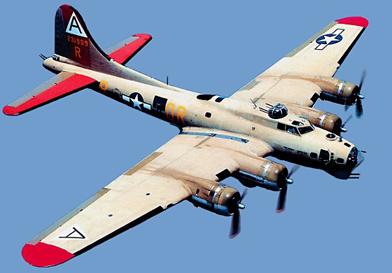
order to fully understand the destructive power of an Allied air raid, but it is appropriate to devote a few significant lines to equipment used for the raids:
- in 1940, the British Bomber Command made use of twin-engine Armstrong Witworth Whitley, whose planes loaded with bombs had to be curtailed because of the long journey that would take (England-Milan and back), then no more than 2,000 pounds;
- from ' autumn 1942 until the summer of 1943, Bomber Command used instead of the family jewels, the four-engined Stirling (each capable of carrying 6,000 pounds of bombs), Halifax (5,800 kg) and Lancaster (6,500 kg). It was also used the twin-engine Wellington, the De Havilland Mosquito (twin for reconnaissance, which were systematically taken from photographs of the post-bombing) and the famous Spitfire, hunting for ground reconnaissance and machine guns;
- dal 1943, gli attacchi vennero affidati alla MAAF (Mediterranean allied air force) e alla USAAF, utilizzando quadrimotori Boeing B 17 Flying Fortress (le fortezze volanti) e B 24 Liberator, dotati di carichi distruttivi inferiori a quelli inglesi. Tali aerei decollavano dalla Puglia e dalla Campania, ormai liberate dal giogo nazi-fascista;
- nell'ultimo periodo di guerra, volarono su Milano anche altri aerei statunitensi, tra i quali il Republic P 47 Thunderbolt, dagli Italiani ribattezzato Pippo, tragicamente famoso per incursioni solitarie sia notturne che diurne per mitragliamento di strade e ferrovie.
Per quanto riguarda le bombe aviotrasportate, gli Inglesi utilizzarono bombe incendiarie di piccole dimensioni e classiche bombe da 250, 500, 1000 e 2000 chilogrammi. Raramente anche bombe da 6000 chili.
Gli aerei statunitensi erano equipaggiati con bombe da 250 e 500 chili, ad alto esplosivo e dirompenti.
Modalità degli attacchi
Gli attacchi su Milano (come del resto su altre città) furono inizialmente solo notturni: gli aerei inglesi decollavano da basi posizionate nel sud dell'Inghilterra verso l'ora di cena, attraversavano nella serata i cieli della Francia, occupata dall'esercito di Hitler, varcavano le Alpi e a mezzanotte piombavano sulla città, dove restavano per circa un'ora, per poi far ritorno alle loro basi.
Svolgendosi al buio, e non potendosi sempre contare su cieli tersi e lune piene, l'incursione era preceduta by the passage of air known as "pathfinder", ie segnastrada, throwing waves of bright flares show the route the bombers and objectives.
After 1943, the USAAF air attacks instead of days, at all hours, with greater risk of being killed, but more likely to hit the targets set. Usually in the morning took off from Puglia, flew over the Adriatic, and the Romagna viravano focusing on Milan. In return, the aircraft had the chance, now freed of the enormous weight of the bombs, machine guns to hunt freely, across what they thought was good hit (moving trains, buses, military columns in the displacement).
Part II: Chronology of bombings
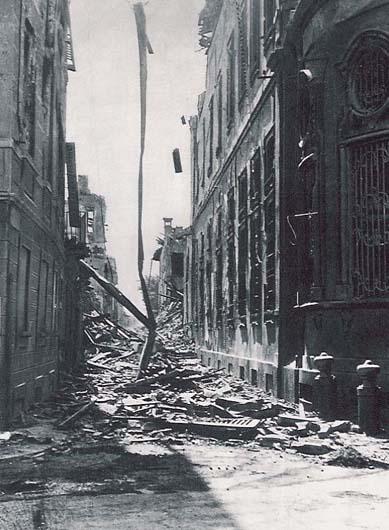
Year 1940
night between 15 and 16 June
Milan suffered the first air strike after only five days after the entry into the war .. The air-raid alarm was given at 1.48. Several buildings were hit, and he counted one dead and several wounded.
night between 16 and 17 June
At 22.30 the alarm sounded after the sighting of eight aircraft that flew over the skies of Milan. Second alarm at 0:23 for other bombers approaching from the south, then a warning fifteen minutes later, planes dropped flares in the area adjacent to the Caproni, who then was actually hit by about 25 bombs. At 1.00, reported air from the north to the south, to 2.00 release of bombs on the Milan-Laghi. Last alarm at 5.04, 6.22 and final all-clear. Damage is not significant.
night between 13 and 14 August
After nearly two months of calm, the alarm for 0:55 air from Como, Varese and Domodossola. Were dropped bombs and propaganda leaflets. We counted 15 dead and 44 injured due to attacks concentrated in the streets Sarpi, Settle, Moscow and Padua Avenue. Greek and other damages as a Messina. The DICAT fired numerous shots, but it can strike without hearing English.
night between 15 and 16 August
alarm at 0:40, but because of the flak DICAT, the British aircraft were freed of their loads of bombs on Merate and Mariano Comense. A Wellington aircraft was shot down, killing one of the five pilots.
night between 18 and 19 August
alarm at 0:40, 14 bombs were dropped (Innocenti Lambrate affected establishments, Caproni-Forlanini airport and seaplane base).
night between August 24 and 25
alarm at 0:49, but release of flares.
night between 26 and 27 August
arrivals between 1:00 and 3:00. No bombs dropped, two British aircraft shot down (one in the Ligurian Apennines, in an ARES).
night between 18 and 19 December
Bomber Command are alive after more remade three months of silence. The alarm lasted from 2 to 4:30: destroyed a farmhouse in Assam and hit the street in Milan Col di Lana (eight dead, 16 wounded).
Year 1942
If 1941 was passed without any mission of Bomber Command, who had preferred to concentrate its forces in other war scenarios, the 1942 (which seemed quite a year) showed the preparation and determination of the British in months October.
late afternoon of October 24
the town was taken by surprise when the sound of sirens was built over the noise of traffic at 17:57: first, because for more than a year the airplanes had deserted the skies of Milan, also because until then the attacks were always carried out during the night. But what most surprises was that the first bombs began to fall just three minutes after the alarm, which apparently was given with improper delay. Approximately 73 Lancaster aircraft are poured in waves over the city in a time of intense crowding and movement. The DICAT intervened already puzzled, trying to remedy a number of defensive mistakes (which in fact were reprimanded the next few days, even in the press). The bombs were of all sizes, including less than 12 pounds by 2000, more than 2,000 high-caliber incendiary bombs and more than 28,000 small calibro.La second phase of the attack was disturbed by the smoke of Fire broke out immediately, rising to five hundred meters shielding the sky. They rose in the air to intercept the bombers, five Air Force aircraft, without major successes. A Lancaster crashed to the ground by the parties in Segrate, killing perhaps attributable to the anti-installed at the Caproni. After the raid, 135 were found dead, 331 wounded, some of whom did not survive. Large areas of the city are damaged or destroyed. According to the report of the Prefecture, suffered serious damage to the buildings in Via Pantano, street course and Velasca Rome (now Roman gate) to the civic 7.9 and 10, two plants in the region and the area via S. Christopher, Piazza Tricolore, viale Montenero (from civic 72 to 76 and 73), via Archimede, Via Melloni, Slaughterhouse and the Farmer's Market (Victoria airport), via Messina, Lomazzo, Sarpi, Aleardi, Buenos Aires (number 33 and 58), square Bacon, via Oxilia (civic 23 to 29 and 26), by Saul (18 to 28). The San Vittore prison was damaged, and because of abatement of a perimeter wall and seguitone melee, hundreds of inmates fled. The disaster forced the municipality to provide schools and public buildings to house the homeless, while the citizens complained about the insufficiency of public shelters, which have proved a number less than the practical needs for shelter during the attacks.
night between 24 and 25 October
fires still raging caused dall'incursione afternoon, when at 22:44 Milan came upon other British bombers. However, the attack is considerably lower than during the day just made, because of the few aircraft that actually managed to reach the town, with the flock suffered many losses along the way (due to time and anti-Swiss). So many bombs scattered over the surrounding territory Milan, some even ended up on the Charterhouse of Pavia and Milan began Vigevano.Per thousands of displaced: every evening weekday masses huddled on the carrier and trains (but somebody had to make do bicycles) to spend the night, after a days of hard work in adjacent areas considered not subject to night bombing, finding home at premises made available by the end of 1942 contadini.Alla began to be reduced by the city transport network, mainly due to lack of spare parts. Many lines were deleted, and the races began to have a reduced frequency.
Year 1943
DICAT the beginning of the year, after having shown very little preparation and effectiveness, was joined by German Flak. Bomber Command had meanwhile been improved and perfected, and began the systematic destruction of cities tedesche.A Milan, meanwhile, fell to a daily ration of bread 150 grams, the bonds lost value and the population took hold barter only way to get a living.
night between 14 and 15 February
The warning sounded at 21.30, and after half an hour to 22:06, the great alarm. Lancaster began to drop about 138 bombs at 22:34. The route had been drawn from several pathfinder on Lake Maggiore. One plane was hit by flak and crashed at the bottom via Boffalora, the Barona. A crew member was not found, and one of the engines was unearthed in 1990, while working on the construction of two underground terminus Famagusta. During the attack were dropped 110 tons of explosive bombs and 166 tons of ordnance incendiari.La British reconnaissance to assess the damage inflicted was made four days after a plane De Havilland Mosquito. According to the report and interpret the pictures taken from above, are damaged, Alfa Romeo, Caproni, the Isotta Fraschini, the Centenera Zinelli and manufacturing and tobacco. Damage at the airport then flour, Porta Genova, Via Messina to the tram depot and bus station in Corso Sempione. In addition, 35 civilian areas damaged in the course Rome, at the Dome, the Arena, in Via Mario Pagano, Piazzale Loreto, the main station near the Italian universities Cattolica.Secondo pads the next few days, resulted in several bad movies, the central milk, other central Stipel more 203 case distrutte e 220 gravemente danneggiate, 376 con danni importanti, e più di 3000 quelle con danni lievi. Gravi danni subì il Corriere della Sera in via Solferino.Per quanto riguarda il patrimonio culturale ed artistico, danneggiate risultarono le chiese di: S.Maria del Carmine, S.Lorenzo, S.Giorgio al palazzo. Inoltre il palazzo Reale, la Pinacoteca Ambrosiana, la Permanente, la Galleria d'arte moderna, il Conservatorio.Per domare gli incendi dovettero intervenire anche i vigile del fuoco di Bologna, oltre a quelli di tutte le province vicine. Alle otto del mattino seguente riprese la circolazione dei tram e dei treni alla Stazione centrale.
Il conteggio dei morti si attestò su 133, con 442 feriti. I senza tetto risultarono 7.950, ma pochi giorni dopo quelli regolarmente registrati presso gli uffici comunali furono 10.000. La città subì un ulteriore svuotamento da parte della popolazione, sia perché rimasta senza una casa, sia per timore di ulteriori attacchi. Le scuole furono chiuse a tempo indeterminato, sia per il pericolo di bombardamenti, sia per mancanza di combustibile.
Notte tra il 7 e l'8 agosto
Il 25 luglio Mussolini era stato arrestato dopo la storica seduta del Gran Consiglio del fascismo, e tradotto sul Gran Sasso. Per accelerare la resa dell'Italia, venne allora programmato un ciclo di bombardamenti ferocissimi su Milano, che, secondo le intenzioni, dovevano distruggere la città entro un mese.Il primo di tali attacchi iniziò con l'allarme delle 0.52 dell'8 agosto, quando aerei nemici erano stati segnalati in passaggio sulla frontiera svizzera. Le bombe iniziarono a cadere alla 1.10. I Lancaster della RAF sganciano soprattutto bombe incendiarie: presto enormi cerchi di fuoco si propagarono a Porta Venezia, porta Garibaldi, in corso Sempione, Magenta e Ticinese. Il teatro Filodrammatici andò distrutto, così come gran parte del Corriere della Sera. Risultò inservibile l'ospedale Fatebenefratelli. Pesanti danni anche al museo di Storia naturale, al Castello, alla Villa Reale, al palazzo Sormani. In totale, si ebbero 600 edifici distrutti, sotto le cui macerie persero la vita 161 persone, più 281 feriti.La contraerea riuscì a colpire due Lancaster (Which fell in a street Gustavo Modena, the other to pieces, fell on the road Compagnoni and surroundings). The blackout was imposed on the city from 21.30 to 5.30. The nearest ATM managed to resume his duties only in the suburbs, since most of the main streets was impractical to vehicular, blocked with rubble and littered with potholes ..
night between 12 and 13 August
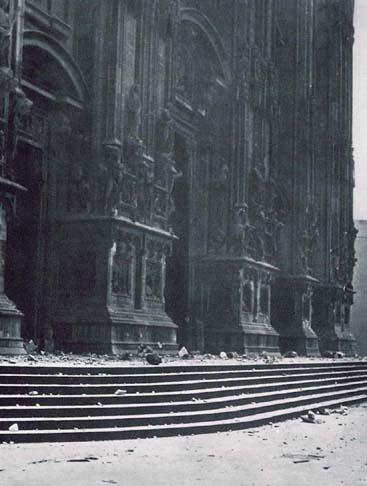
For this mission, the British Bomber Command mobilized all available equipment, and Milan were even sent 504 aircraft: 321 183 Halifax and Lancaster. The purpose of this deployment of forces was to create the city known as the vortex of fire (as theorized by the commands England the achievements of German cities), for total annihilation. For this reason, among the 2,000 tons of bombs delivered that night, there were 380,000 pieces incendiari.L 'alarm was given at 0.35, with a cloudless sky. Not even ten minutes later began the dropping of bombs and incendiary, all for about an hour. The anti-anything he could do. The center was the most affected area, but sparing the Ticino area, Garibaldi, Simplon. The fires broke out everywhere, with destructive effects on Palazzo Marino, the Police, the Commissioner Cathedral, the Castle, the church of San Fedele, Santa Maria delle Grazie (Last Supper, but not the "plaster" in the bags of sand), the Cathedral reported serious damage, as well as the gallery (once destroyed the building facade and "scrape"). The power of the fire was fed by the wind that had risen because of the fire itself, which drew air from the countryside to feed itself (it's the effect, greatly enlarged, that occurs when you open the door of a stove: the flames quickly regain their strength because they attract new oxygen from the outside). The scene must have seemed apocalyptic dawn: almost half of the city was in flames and the air totally unbearable, entire neighborhoods were unsafe. They were, however, restored some bus lines to facilitate the evacuation of the last remaining citizens, approximately 250,000 people.
night between 14 and 15 August
This time, 140 Lancaster came down in Milan at 12:32. In an hour, easily dropped their bombs, guided by the fires still burned in the previous attack that does not Domanti. Were re-centered the Castle, the Royal Palace, Teatro dal Verme theater and Verdi. Many industries heavily affected. The few citizens present gave relief to firefighters and oompah men to stop the devastating fury of the flames, but the business was slowed by the lack of water caused by the destruction of the pipes of the aqueduct.
night between 15 and 16 August
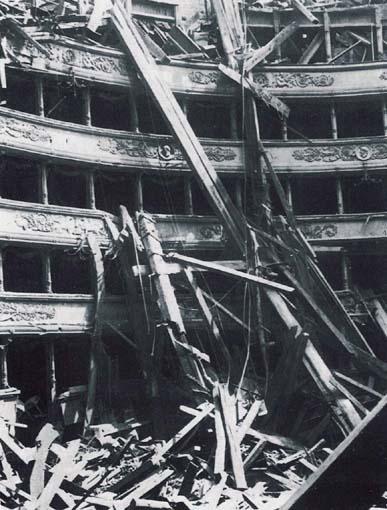
The third attack programmed cycle sounded the alarm at 0:31. Not all 199 Lancaster took off from England this time they reached Milan, in an unfortunate night for them. Most unfortunate it is for the city: entire neighborhoods were bombed. We report only: State Archives (huge paper losses), the Duomo, La Scala, which had broken through the roof (which will be covered with temporary shelters until the beginning of restoration work), Rinascente (totally destroyed, then demolished because non-recoverable). The newspapers came out the next night, in limited editions, partly because of the lack of paper to the presses. The city was a prey to fire and covered with rubble, and the Bomber Command decided to stop, even if dissatisfied. In fact, the total destruction of the city appeared an impossible task, for two ragioni.Innanzitutto as construction of buildings (very little wood), and the thermal inversion that makes all the sultry days of August: the extreme heat and humidity even at night levels close to 90% prevented the air to circulate, why the fire did not spread as easily never that occurred on German cities. In addition, the armistice was now near useless to insist.
The terrible attacks of August had affected 50% of the buildings, of which 15% severely damaged. The homeless were at least 250,000, and 300,000 displaced. To remove le macerie si reclutarono con difficoltà 5.000 operai, oltre a 1.700 militari. La maggior parte degli sgomberi e delle messe in sicurezza fu affidata alla manovalanza ormai esperta della ditta Romanoni (che dall'inizio del conflitto aveva vinto l'appalto per tali incombenze).Il servizio di trasporto pubblico fu quello che ne uscì più disastrato (acqua, luce e gas erano infatti ripresi entro le 48 ore). I tram e le filovie erano totalmente distrutti, così come le rimesse, devastate dagli incendi. Dalle vetture meno danneggiato si recuperano i pezzi per rendere efficienti pochi tram, in una sorta di cannibalismo meccanico. Inoltre, con la rete di alimentazione aerea danneggiata (i palazzi crollando avevano travolto in centinaia di punti i fili della current) also called into the tram service had circulation problems. Initially they were used so the little steam locomotives of the leg of wood (which were so removed from the suburban services), which, with the trailers of luck, they could guarantee at least a few lines, especially to connect the railway stations.
Merciful was the spectacle of the monuments of Milan: in all, the morning of August 16 was devoted to a survey of the scale, as mentioned centered in the middle of a large bomb. The boxes appeared severely damaged, only the stage, greatly restored in the thirties, had been saved thanks to the metal curtain that had prevented the fire from spreading. To avoid the rain and the chill of winter destroy all that escaped during the month of September was designed and put in place a temporary covering road, to protect the boxes and decorative friezes. The roof was made of makeshift materials, mainly wood and roofing felt. Just finished a conflict would have been possible to complete the renovation and restoration of the theater.
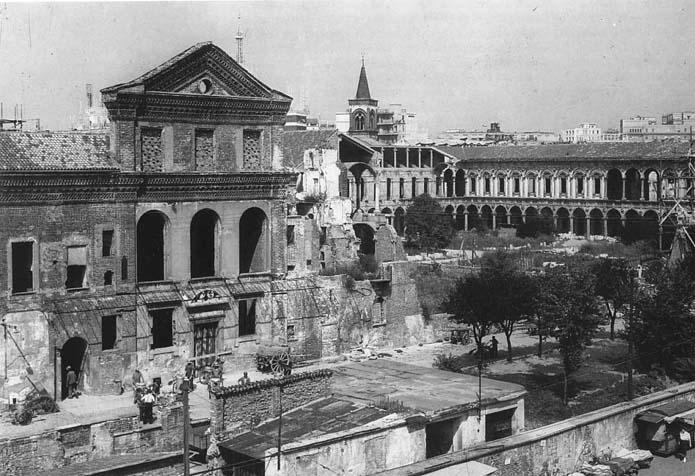
Santa Maria delle Grazie, except in the Upper Room, he left it partially crippled. Bramante's dome is somewhat damaged, as well as the cloister and the fountain in the middle, hit by a bomb. The small cloister was hit, but the fire had been bravely propagatosi off from the work of friars.
Finally, the Hospital, the historic Ca Granda, was hit by six or seven bombs caliber. Was destroyed the central courtyard, which lost the arcades. The cloisters were also affected side. It will take decades before we can see the restored ancient hospital complex. The September 8
gave Italy an armistice on November 24 Mussolini gave birth to the Italian Social Republic.
With the coming of winter had to pull down hundreds of trees (among the survivors of the fire) to feed the stoves at home.
Year 1944
After the armistice, while the Anglo-Americans from southern Italy dating back slowly now free, Milan came under the control of the Germans, aided by independent teams of fascists such as the "Ettore Muti".
night between 28 and 29 March
starting from Puglia, 78 Wellington arrived in Milan at 22.40. The attack focused on the scale of Lambrate. The alarm was sounded late, ten minutes before the launch of Bengal and on Rogoredo Affori, so much so that the flak, even if alerted, did not hit enemy aircraft. The damage to the rail system were enormous: about 300 cars destroyed, laid waste to Segrate and binaries. They were also affected numerous roads and streets adjacent to stops attached, with a budget of 18 dead and 45 wounded.
Morning of March 29
12.15 si presentarono sulla città, ancora nel caos per l'attacco notturno, poco meno di 139 aerei (tanti erano partiti dalla Puglia, ma alcuni si erano dovuti ritirare prima di sferrare l'attacco). L'allarme fu dato col dovuto anticipo, alle 11.40, e le prime detonazioni si udirono su Lambrate, vero obiettivo del bombardamento. Distrutte risultarono cinque cabine di manovra, almeno 5 km di binari e impianti, tutta la linea di elettrificazione aerea, 5 locomotive e circa 500 vagoni. Anche se l'attacco si era rivolto al materiale rotabile, ci furono almeno 30 morti tra Rogoredo, via Corelli, via Tertulliano, e Ronchetto sul Naviglio. Anche in questa occasione la contraerea nulla poté: anche se in mano alla Flak tedesca, con l'ausilio della'AR.CO. (Anti-aircraft artillery), the results were disappointing as when it was operated by purely indicative.
morning of April 30
The alarm rang at 11:38 at noon the first bombs began to fall. The bombers were divided into two groups, with two specific targets: Breda, aircraft construction section, and the airport Lambrate. The Breda turned semi destroyed, reduced to ashes the airport saw 32 locomotives, 100 wagons, the workshop increase (plus 22 breaks track).
night between 5 and 6 April
At 20:50 of the 205th British planes dropped bombs on Lambrate Group. There are no official records of the mission, we assume an error of goal.
Notte tra il 10 e l'11 luglio
Alle 23.45 vennero lanciati razzi illuminanti, data la forte foschia afosa presente nell'aria, poi 86 Wellington inglesi si scatenarono di nuovo su Lambrate: la volontà strategica era quella di annientare il principale scalo ferroviario di Milano, dal quale passavano le merci per le industrie convertite dai tedeschi alla produzione di materiale militare. Danni limitati.
Notte tra il 13 e il 14 luglio
Il 205° Group inglese inviò per distruggere Lambrate 89 aerei, e l'allarme suonò alle 23.32. Per la prima volta la contraerea riuscì a mettere in difficoltà i bombardieri, due dei quali vennero colpiti. I danni allo scalo risultarono facilmente rimediabili, proprio because of the bad luck that night hit the British.
End of July and August
In these summer months the attacks from the sky were concentrated on the roads, means of transport and companies in the area around Milan. Were bombed the bridges over the Ticino and Boffalora Turbigo, the bridge to sull'Oglio two Palazzolo.Il August 24 Liberator of the 34th Squadron South African cast on Milan propaganda leaflets.

the night of Sept. 5 and Sept. 6 were dropped from the bombs, which hit a building in the square and the school via Morbegno Russo. The Breda di Sesto San Giovanni was hit by several bombs caliber minore.Nella night between 10 and 11 September flew over many devices Milan, affecting only a few buildings with no strategic interest, probably due to a positional error.
Morning of October 20
At 11:14 the little alarm was given, followed too soon by the great alarm, at 11:24. The first bombs began to hit at 11.29, or about a quarter of an hour. The population was therefore not the time to properly secure. The areas affected were those adjacent to the airport Lambrate, with tragic consequences for the civilian population. This fact was the most harrowing of the bombing, the destruction of the elementary school Gorla. Here, when the first alarm sounded, the teachers urged the children to store pencils, notebooks and folders, and starting in the underground shelter. However, during the descent down the stairs of the school, the second alarm sounded, so unexpected (because the first had been given only ten minutes earlier) can be interpreted by some as the all-clear. When on the stairs at a time of great uncertainty and conflicting voices, they found themselves crammed around two hundred children and school staff, a bomb fell (presumably) 250 pounds, hitting right in the stairwell and its cargo of small lives. 170 other bombs fell on the neighborhood and Turro and precooked, wreaking havoc and grief in families. At the end of the raid, including school children and victims of the civil districts affected, the dead were about 614.
November
The autumn months, however, having seen numerous attacks targeting locations adjacent to Milan, which, however, Lodi, Codogno, mainly to destroy factories or stop trains. The city suffered sporadic bombings, but always isolated bombs, perhaps the result of mistakes or emergency release.
December
As the previous month, continued attacks on places of Milan, while the city was largely spared (call Lambrate locomotive shed Greek, Breda, the Roman port). The attacks continue and spread out the last months of 1944 had caused great fear in the population whenever they were to organize uno spostamento con mezzi di trasporto (treni, tram extraurbani, ma anche corriere, auto private, carretti e perfino biciclette erano diventati gli obiettivi preferiti degli aeroplani).
Anno 1945
Milano iniziò l'ultimo anno di guerra in condizioni disperate ma ancora organizzata: si pensi alle numerose mense collettive predisposte dal Comune per supplire ai bisogni della cittadinanza, spesso impossibilitata a procurarsi il cibo o privata di una casa per cucinarlo. Se ne contavano in corso Indipendenza, in via Cimarosa, in via Verdi, in piazza Diaz (in un capannone che sorgeva dove ora c'è il giardino e il monumento ai Carabinieri), in piazzale Maciachini, in viale Padova, in piazzale Accursio. Intanto, tutte le città del Nord Italia risultavano ormai indifese, sotto i continui bombardamenti e mitragliamenti da parte dell'aviazione anglo-americana.
Gennaio
Milano subì numerosi piccoli attacchi, prevalentemente concentrati su scali ferroviari o su convogli appena usciti dalle stazioni. Si susseguivano incessantemente gli attacchi ai mezzi di trasporto, senza distinguere purtroppo fra treni che portavano merci e materiale militare in Germania (attraverso la Svizzera) e convogli carichi di operai e sfollati, come quel Gamba de Legn colpito da un caccia nella tratta fra Inveruno e Cuggiono (10 morti e 40 feriti).
Febbraio-Aprile
Ancora piccoli attacchi, per un totale di 14, che causarono circa 28 morti and eighty wounded. The last was recorded on 12 (machine guns at grade along the Via Manzoni) and the 13.Il April 25, who became just the dark, Mussolini left Milan to Como. On 30 April the British troops entered the city of the U.S. Fifth Army, the war was over. Conclusions

The sixty air strikes caused the city of Milan between 1200 and 2000 deaths.
Roughly, the city lost a third of its buildings destroyed directly by the raids, fires caused by them or for demolition later made necessary or are considered cheaper than restoration. By the enormous mass of debris cleared from the ground rose the city of San Montagnetta Siro to QT8 (the fourth model of the thirties). Even today, however, remains survive citizens who remember the terrible attacks (eg, the building to shreds at the junction of five streets, just off Via Santa Marta). Of the 80,000 trees
citizens present in 1942, at the end of the war if they only census of 30,000. For many years the homeless had to live in small houses set up by the city, built the city limits, such as those in Avenue Argonne, halfway up the street Lorenteggio in San Siro. The
May 11, 1946, at 21, he inaugurated the revived La Scala, the concert conducted by Arturo Toscanini and music by Rossini, Verdi, Puccini, Boito.
The first step of a slow normal to find.
Mauro Colombo

Sunday, July 22, 2007

Where I Can Buy Hanbok Dress In Manila

LUCI SUL FUTURO.....

Cari concittadini,
pausa lunga e lunghi silenzi. Ce ne scusiamo a nome degli amministratori locali che fanno finta di non sapere nulla su questo depuratore industriale...la parcella non la vogliamo, non si preoccupino!
oggi vogliamo segnalarvi due cose nell'ordine di accadimento:
- domani alle ore 10.00 verrà insediato il nuovo consiglio comunale. Fin quì niente di nuovo ma....all'ordine del giorno un tema SCOTTANTE : il depuratore Wisco.
alleghiamo per completezza l'O.D.G.

Convocazione del Consiglio Comunale

Il Consiglio Comunale è convocato per la seduta di insediamento per Lunedì 23 Luglio 2007, alle ore 10,00 presso il Palazzo Baronial Via Plebiscite in the Hall of consiliari.All meetings' agenda are entered the following topics:
direct election of the Mayor and City Council - Validation of the elect;
Declaration of Councillors to form the groups board;
Oath of the Mayor;
Election of the President of the Municipal Council;
Election of Vice Chairman of the Board;
Communication of the Mayor on the membership of the Board;
Election Municipal Election Commission;
Environmental impact assessment for the plant wastewater treatment at the OGR
Trenitalia SpA S. Mary Bruna. Actions and interventions of the City Administration to implement appropriate measures to protect the environment and public health. The
SindacoOn.le Dr. Ciro Borriello

second thing: the CGIL
-Tower of the Greek and that of Naples have taken out the walls of our city a manifesto whose title says it all on the current STALL: PURIFIER SM OF THE BRUNETTE: MYSTERIES AND TRUTH '.
Finally someone with a bit of courage begins to raise other questions, new and disturbing, because one wonders if there's any politician who wants to know and be silent.
SVEGLIAAAAAAAAAAAAA Citizens! Let's talk about your health security not peanuts.
INVITE ALL CITIZENS INTERESTED IN THE CASE OF THE CLEANER TO FOLLOW THE COUNCIL OF THE CITY OF TOMORROW AND WENT TO THE QUESTIONS RAISED THE MANIFESTO OF CGIL
as always, thank you.

Thursday, July 19, 2007

Scars Stomach Ingrown

July 1945: Communist partisans massacred 54 people in prison in Schio. A war already ended. And Mengele

TOGLIATTI HELPS SOME OF THE AUTHORS OF THE MASSACRE LEAVING expatriates.
"disgrace," she hissed Togliatti, Minister of Justice of the Cabinet chaired by Ferruccio Parri, a tone of contempt and pity. Between the late morning of July of 1945 advanced. "Coming right there where you administer the so-called justice of the bourgeois state," said the Minister who was also Secretary of the Communist Party. I had just told the visit I received in my office at the Ministry Arenula. "We are those of slaves," they told me almost in unison three visitors, with the butt of a barely concealed gun to his waist.
"Let me come at once Bubbles and Gallo," he continued, citing two deputy secretaries Togliatti and Longo Secchia with their name conspiratorial. With them, the meeting lasted no more than ten minutes. I saw them come out together quietly, without a shadow of opposition. Togliatti handed me one of the usual small sheets on which it was obtained the minutes of the regular meetings of the secretariat of the PCI. He had filled himself with a kind of order usual manic.
"slaves," was written on the left, then right-hand column two other lines: "Transfer to a safe place." Not guilty of anything I objected, in the throes of my isolated precipitation. "Talk about it now with Matthew, "concluded with the calm Togliatti reserved to a practice routine banality. Matthew, brother of Peter Secchia, was in charge of maintaining relations with two officials of the NKVD, the Soviet police, who were among the diplomats of the rank of ' USSR Embassy, \u200b\u200bVia Gaeta to Rome. "goddamnit, pork Executioner, but these people, the ien a brigade, are becoming an army. Every day someone comes along who should leave in a hurry, "Matthew repeated with a sort of detached curiosity, as expressed in the Piedmont. I went back to the ministry, putting at breakneck speed away from the shops in the avenue which joins the Dark Ponte Garibaldi. I found myself waiting in the My uffticio, the three of Schio and said breathlessly:
"The Secretariat decided: Prague. "
I saw them a few years later. Togliatti and I went out with the Jotti Tynsky chram, Tyn Church in Stare Mesto, the Old City the capital of Czechoslovakia. One of them came up to me." Do you remember me? They are slaves, "he said, looking even Togliatti. The partisan took from his pocket and showed him the piece of the Italian Communist Party in 1947, with all regular monthly stickers applied. Between that of a normal member of the Communist Party, forced to travel abroad. He was shot, hit, was sought, but was acquitted by the Party and the Party had obtained coverage "logistics." He turned back to Togliatti and said: "We'll be back soon in Italy, after winning the elections".
Togliatti girò lo sguardo altrove, ormai disinteressato, come dinanzi ad un innocuo ma fastidioso fantasma.
Il fantasma aveva fatto materialmente parte di una ventina di uomini che s'erano riuniti, la notte del 6 luglio 1945, a Schio, una cittadina in collina, venticinque chilometri a nord dì Vicenza, in un parco, la Valletta dei Frati', appena fuori dal centro. Erano ex partigiani dei battaglioni "Ramina Bedin", "Ismene", della divisione garibaldina "Ateo Garemi" e della Polizia ausiliaria, istituita alla fine della guerra,' in maggioranza comunista. Avevano come nome di battaglia "Teppa", "Morvan", "Gandhi",, "Quirino', "Terribile", "Guastatore" e altri ancora, che riconoscevano, assieme, la supremazia del comandante Igino Piva, detto "Romero". Ad un segnale, convenuto, un colpo di fischietto, con la parte inferiore del viso coperta da grandi fazzoletti, fecero irruzione nel carcere locale, immobilizzarono i guardiani, Pezzin e Girardin, e spararono, al pianoterra e al secondo piano, mitragliando i prigionieri a distanza ravvicinata. Uccisero 47 persone e ne ferirono 24, mentre altre 7 morirono in seguito in ospedale. In totale 54, di cui 14 donne. Nessuno di loro era allo stato legalmente incriminato, ma solo sospettato di essere iscritto al Partito fascista repubblicano, anche per banali incarichi amministrativi. Il 9 luglio giunse a Schio il generale americano Dunlop, comandante dell'AMG per il Veneto, accompagnato da altri ufficiali. Il generale, al termine di una formale inchiesta, parlò chiaramente di "violenza rossa premeditata", come la Corte di Assise di Milano confermò il 13 novembre 1952, identificando tutti i partigiani responsabili. "L'Unità" aveva parlato di gruppi incontrollati, poi li aveva definiti ingiustificatamente trotzskisti, quindi nemici del Partito comunista italiano. Ma la stampa di partito aveva in precedenza inveito anche contro i simpatizzanti locali del passato regime: "Sterminiamoli, arrestiamoli, fuciliamoli". Nel voluminoso libro di un eminente storico di sinistra, Claudio Pavone, sulla Resistenza, pubblicato dieci anni fa, dei fatti di Schio non si trova menzione. L'amnistia del Guardasigilli Togliatti del 1946 alla fine salvò i responsabili del più vasto eccidio perpetrato durante il prolungato periodo della "resa dei conti" dopo la cessazione della guerra: un fiume complessivo dì sangue di oltre 15 mila vittime della politica della violenza e del rancore di classe.

Monday, July 16, 2007

Can I Get E Coli From Strawberries In My Fridge

bleach with acid eyes blonde

Sette coppie di gitani “ariani” furono sottoposti a esperimenti atroci dal medico SS mentre una pittrice ebrea era costretta a ritrarli. Ora le loro storie riaffiorano dagli archivi
L’occhio era molto importa nte, spiegò il dottor Mengele: lavorando con bisturi e solventi sull’iride, si poteva trasformare in grigia o in azzurra, da nerastra che era. Infatti quelli erano zingari «buoni». I loro avi non erano forse partiti dall’India del Medioevo, dove già si venerava la svastica? E nei loro 60 dialetti non c’era ancora un po’ di sanscrito, di punjabi e bangali? Dunque erano indoeuropei: pochissimi, quasi sempre «asociali»; ma ariani. E come gli ariani veri, come Mengele o Hitler, non potevano avere occhi neri, ma azzurri: nei laboratori di Auschwitz, iniziarono così gli esperimenti. «Tutti lo sapevano. E me li ricordo bene, i gitani "puri"», racconta la pittrice ebrea Dina Gottliebova, «perché Mengele mi obbligava a ritrarli, mentre lui misurava i crani. Gli altri, i "misti", dopo un po’ che arrivavano non li vedevamo più». Furono 20.078 gli zingari died at Auschwitz, about 23 000 inmates. And about half a million across Europe, maybe 90% of the total, was called Porraimos in gypsy 'big eater', the extermination of the Roma, Sinti, the "Manush" (from German "mensch," "men" so they called them in Germany). Here they are, their portraits painted by Dina, as he has shown America the PBS public television, in 57-minute documentary titled Porraimos: the gypsies of Europe in the 'Holocaust. Angry or sad faces, the music of gypsy violins, and bodies that look to be black and white photos or videos taken by 'cineama-bulls "of the SS. And children playing, not knowing. In August 1944, at Auschwitz, those of the "People of the Wind" were almost all dead. In their area were 7 pairs of twins, chosen by Mengele for studies of 'eugenics', along with another doctor and two "nurses". And Dina Gottliebova: "As a child, in rural Czechoslovakia, the gypsies had seen them go in the caravan, I was fascinated. We found there to Auschwitz. I painted the huts of their children with scenes of meadows and mountains, or with figures of Snow White. " Even children were dying, as other survivors told the cameras. One woman describes the prisoners forced to jump into a pond and small gypsies who could not swim left to themselves by the guards, and parents forced to take no action. Kids they could tap the bank would then collect firewood to burn the bodies of others wet. "My mother," said another witness, "me and my twin sister gave birth without any problems. But then she was sterilized and we were taken away, by geneticists that they wanted to study. The last time I saw my sister, was one of those clinics. " These testimonies have overlapping with those of the minutes of Nuremberg, disseminated on the Internet by Harvard University. Were approximately 30 000 Gypsies cataloged by scholars who went to camp in Nazi concentration camps in search of the "gypsy good." Himmler, the head chief of the SS, he was certain: "The pure gypsies should be placed in special reserves, for their alleged origine ariana». Gli altri furono inghiottiti dalla storia. Che ancor oggi discute sulla loro sorte: per alcuni studiosi la persecuzione nazista fu motivata da discriminazioni sociali, culturali ed economiche, più che da vero odio di razza. Per altri, il fattore razzista prevalse. Scrive Michael Burleigh nella sua Storia del Terzo Reich: «Nel 1930, alcuni residenti a Francoforte sul Meno si lamentarono degli "zingari" che si trovavano fra loro. Sporcavano la zona con rifiuti organici, disturbavano con zuffe. Quando le autorità cittadine lasciarono che il problema si trascinasse, fu il Partito nazista a occuparsi della situazione». Chiunque abbia ragione, trionfò il Porraimos, il grande divoratore. «Questa gente discende dai paria indiani», said Robert Ritter, director of racial hygiene. "They are prone to crime." For Adolf Eichmann, the accountant of the Holocaust, just add "four cars to trains with the Jews," and everything would be solved. "The fascists hunted wild game such as the gypsies," says Anatoly Kuznetsov recounting the massacre of Babi Yar, where 29 to 30 September 1941, together with 33,371 Jews, including whole tribes were exterminated gypsies. In the winter of '42, from Simferopol in the Crimea, the commander of the Special Einsatzgruppe D reported to Berlin that "Here the issue is resolved 'last statement:" Justice 810 elements. " L 'throughout April 8 '42 Crimea was declared "free of Jews and Gypsies 'and' the population did not show any particular anxiety that the situation of Gypsies-ano had to share the fate of the Jews." Moreover, even Heinrich Lohse, the Reich Commissioner for the Baltic, had been clear in its "confidential order of December 24, 1941" to the SS: "The gypsies who roam the country are a double danger. They may have diseases, typhoid. Are unreliable, we can not give them a useful job. And damage due to hostile Germanic disseminating news. Order so that they are treated in the same manner of the Jews. "
Louis Offeddu. Da Sette/Corriere della sera, 25 settembre 2003

Thursday, July 12, 2007

What Do Wild Card Standings Mean In Baseball

In the USSR of the Gypsies were born eighty years ago the gulag

Che cosa resta della tragedia dei Gulag .
Nel 1926 il lavoro forzato e la reclusione di massa divennero un sistema.
Oggi il mancato confronto con quella realtà agisce da ostacolo alla crescita civile.
ANNE APPLEBAUM
Dalla sommità del campanile del vecchio monastero Solovetsky, nella Russia settentrionale, si scorge ancora il profilo del campo di concentramento. Salendo lassù in una giornata limpida sono riuscita a vedere al di là dello spesso muro di pietra che circonda gli edifici del monastero del XV secolo, un tempo sede dell´amministrazione centrale del campo. A nord distinguevo the silhouette of the church on the hill which housed the notorious underground punishment cells of the field.
Beyond hills and dock extends the vast area of \u200b\u200bthe White Sea and the rest of the islands Solovetsky: Bolshaya Muksulmana, where once prisoners foxes raised for their fur, Anzer, home to special camps for the disabled, women with children and ex-monks, Zayatskie Ostrov, home field of the punitive women.
no coincidence that the Russian writer Alexander Solgenitsyn chose to call his history of the system of Soviet concentration camps Gulag Archipelago. After all Solovetsky first camp specifically designed for political prisoners, was a veritable archipelago, a prison that grew expanding from island to island.
Solovetsky also made a model for what later became known as the gulag. Although Lenin and Trotsky began building concentration camps for political prisoners as early as 1918, was to Solovetsky who proceeded to mechanize and redesign the field and it was there that the Soviet secret police began to exploit the labor of prisoners in the service of State. And yet the State was proud. In an article in 1945, a big piece of the NKVD, the Soviet secret police, wrote proudly that "forced labor as a method of re-education" Solovetsky began in 1926. This year marks the eightieth anniversary of the establishment then of the Gulag.
The origin of the Gulag can be done at least partly traced to the character of Aronovitch Naftaly Frenkel was born in 1833 in Haifa, as the profile of prisoner. In 1923 the authorities arrested him for "illegal transit to the border" sentenced to ten years of hard work to Solovetsky.
As Frenkel was able to make the metamorphosis from prisoner to the camp commander remains a mystery. Legend has it that came into the field, was shocked by the lack of organization that reigned them to write a letter stating in detail the pitfalls of each of the productive activities of the camp, which included foresters, agriculture and the manufacture of bricks . Apparently he sent an administrator the letter to Stalin in Moscow that called Frenkel. We know that
Frenkel tried to transform the area into a source of profit by setting up the infamous system of food rations for prisoners differentiated according to the quantity of work completed, creating in practice a selection of prisoners by their ability to survive. Relatively well-fed prisoners were made strong strong. Deprived of food the prisoners weak became ill or died. The process was accelerated by the high pace of activity required. Frenkel
sent the prisoners to build roads and cut trees off the field. Within a few years Solovetsky Prisoners of work throughout the region. Stalin greeted this course with enormous enthusiasm and promoted the expansion of the camp system even when it was clear to everyone that it was a system not only cruel but also uneconomical. Impose the execution of projects impassable, railroads across the tundra, tunnels to the island of Sakhalin, many of which were never completed. Sent to special camps "enemies" and refused their requests for pardon in person often with the phrase "let them keep working."
Today, 80 years later, we know what was the true cost of the camp system. Between 1926 and 1953, the year of Stalin's death, some 18 million prisoners passed through the Gulag system. Another six or seven million were sent into internal exile in località dell´estremo Nord. A milioni si ammalarono, a milioni morirono. I campi contribuirono a creare la paura e la paranoia che caratterizzarono la vita dell´Urss e distorsero l´economia sovietica, concentrando persone e industrie nel nord gelido e inabitabile.
Considerando l´orribile ruolo giocato dai campi nella storia dell´Unione Sovietica, ci si domanda come mai in Russia il retaggio del Gulag sia un tema così scarsamente dibattuto. Perché una data come l´ottantesimo anniversario della fondazione dei campi di Solovetsky non viene ricordata? Sorgono disseminati per la Russia vari monumenti a ricordo delle vittime del Gulag, ma non esiste un monumento nazionale o un luogo di lutto. Peggio, a quindici anni dal crollo dell´Unione Soviet absent any public debate about the gulag. It was not always so. In the '80s, the beginning of glasnost in Russia, the memories of survivors of the Gulag sold millions of copies. But recently the history books containing similar "revelations" get bad reviews or simply pass over in silence.
In a sense it is not difficult to explain why. In Russia, the memory field coexists confused with that of many other atrocities: war, famine and collectivization. People often ask me: "Why are the survivors of the camps should be given preferential treatment?". Some people then associated with the debate on the gulag economic and political reforms of the 90s, as "a mess, and wonders where all this has brought. Much more significant is the fact that Russia is now governed by former KGB officers, directors direct heirs of the Gulag. In reality, President Vladimir Putin is often called a chekist, the infamous term used to describe the members of Lenin's political police, forerunner of the KGB. It is not in its interest to stress the fact that he was a member of a criminal organization. Tragically
failure compared with the past is hindering the formation of Russian civil society and the rule of law. After all the leaders of the Gulag have kept their dacha, and their conspicuous pensions. The victims of the Gulag has remained poor and marginalized. In the eyes of most Russians today was a wise choice in past work with the regime. By analogy, the more you cheat and you lie, the more it is wise. Some of the Gulag
ideologies survive in a profound sense also dismissive and arrogant attitude that the new Russian elite to the poor and middle class. If the rich do not learn to respect human rights and civil rights of their fellow citizens, Russia is destined to remain a land of impoverished peasants and politicians, millionaires, men who keep their assets in the vaults of Swiss banks and their private jets on the track, ready for takeoff.
Failure memoria del passato ha inoltre conseguenze più banali, di tipo pratico. Può servire a spiegare, ad esempio, l´insensibilità dei russi rispetto a determinate forme di censura e alla costante, opprimente presenza della polizia segreta, oggi ribattezzata Fsb. Il fatto che la Fsb possa intercettare conversazioni telefoniche ed entrare in abitazioni private senza mandato non turba più di tanto i russi. Né li turba l´inquietante orrore del loro sistema penale. Nel 1998 mi recai a visitare la prigione centrale della città di Arkhangelsk, un tempo una delle capitali del Gulag. Il carcere, risalente a epoca pre-stalinista, sembrava rimasto pressoché immutato. Le celle erano affollate e mal areate, i servizi igienici primitivi. Il responsabile Prison shrugged. It was all about money, "he said. The hallways were dark because the electricity cost dear, the prisoners were still awaiting trial week because the judges were poorly paid. I'm not convinced. If the Russian prisons still have the look they had at the time of Stalin, if the courts and criminal investigations are a sham in part because the past haunts the judges, politicians or business elites in Russia.
But very few in today's Russia feel the past as a burden or a duty. The past is a nightmare to forget. As a big Pandora's box closed pending the next generation.
(The Republic, Friday, 10 NOVEMBRE 2006, Pagina 55 – Varie)
© 2006 Cicero
(Distributed by The New York Times Syndicate)