few months after the outbreak of war, and before that Italy decided to take up arms alongside dell'alleato German our country was the subject of numerous aerial reconnaissance missions by the British forces, who wanted to monitor as closely as possible the territory of what, according to their wise point of view, was a future nemico.Nel June 1940, one month after the Italian declaration of war, began the first air raids on Turin, without However, major impact, both because of the still highly organized British Bomber Command, both for the small number of aircraft used in missions. Nevertheless, the population of major cities including sadly what fate lay ahead before. 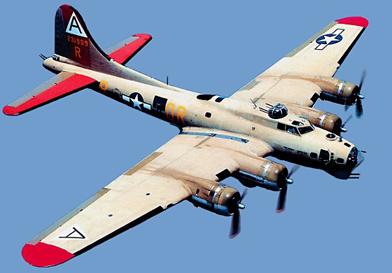 Part I: The scenario
Objective Milan
In 1940 Milan was held by the British a major military target, being the most developed industrial city of Italy and one of the most important in Europe, located within the industrial triangle, with Turin and Genoa. The information service industry
English, even before the conflict dl, had received detailed information and maps of all major production companies and the province of Milan, among which the Alfa Romeo, Edward Bianchi, Officine Galileo, Magneti Marelli, workshops Borletti, the Italian Tecnomasio Brown Boveri, Pirelli, Isotta Fraschini, Breda, Caproni, and Ansaldo, but not last, Falk steelworks.
The city was also considered one of the major railway hubs in the country, characterized by 21 railway lines, from one of the larger stations of Europe and by important freight yards, including Lambrate Farini, joints are vital to these industries. The reports prepared
already begun pointing to a conflict in a million and one hundred thousand inhabitants of the city, the same studies described divided in concentric circles, the innermost of which (the old town, inside the ring of canals) also appeared to be the more vulnerable to intense air attack, and because most populated, and for the closeness of their construction, mostly with narrow streets. It was expected that, if even by incendiary bombing, an easy spread of fire, but noted that the same relations SINCE spy regret the material used for the construction of buildings, and that is almost entirely brick and cement, because of greater difficulty in this spread of fire, which instead had given great results in the German cities, where the abundant use of wood materials.
In light of this, the systematic bombing was at first (until the end of 1943) aimed to hit the city "civilized", focusing on houses and people, so terrified that pushed the government to seek an armistice; in a second time (since 1944) got excited about and war production factories, enslaved to the needs of Germany. The city's defenses
Defense from attacks from the sky was initially assigned to the Fifth Legion ("The Visconti") of the Militia Di.ca.t. (Anti-aircraft defense planning), which boasted, among officers, NCOs and soldiers, nearly 9,000 people, located both in the city and the rest of the Milan area, located in strategic areas and ready at all times to strafe the enemy airplanes. Even some large factories were equipped with their own anti-aircraft batteries, normally placed on the roofs of buildings. After the October 1942
poured in some departments of Italy Flakartillerie German Luftwaffe dependent, to give a hand to DICAT, whose ability to defend the skies had turned very low, so as to be almost feared by the bombers.
The German batteries were placed close to the Italian ones in order to take advantage of the already established communications links. After the armistice, the DICAT disbanded, the defense of heaven belongs exclusively to the German Flak, so that was enhanced by using the staff of the Italian Social Republic Italian. In addition to the defense held off the ground, were always ready to come off in flight, the fighter of the Royal Air Force, stationed at airports and Venegono Lonate Pozzolo (appliances Macchi C 202 and Fiat CR 42, plus some of the Luftwaffe's Messerschmitt Bf 109).
The last step of the defense was entrusted to men of the UNPA (National Union of Air Protection), and Capifabbricato, one for each building, the latter with the task of ensuring the efficiency of any air raid shelters, emergency exits and fire hydrants, and check that the block was adequately obscured, namely, that all the apartment windows were masked with blue paper, first truly passive defense against night raids (even the headlights of trams, buses, cars and bicycles had only a small slit for the projection of light, and the fenders painted white).
The population was warned of impending danger from a first small air alarm (siren), which, at least when even the anti-aircraft and sightings were able to accomplish their task, was given thirty minutes early attack. Then came a second siren, great alarm, which minutes ahead of the first releases of bombs.
citizens had then (in theory at least) time to reach the cellar shelter (for buildings designed or otherwise equipped to the case) or the collective shelters near you. The caretakers of the buildings were also responsible, during the attacks, to throw open the doors, to allow past dall'incursione surprised to shelter in the hallways.
bombers
 order to fully understand the destructive power of an Allied air raid, but it is appropriate to devote a few significant lines to equipment used for the raids:
- in 1940, the British Bomber Command made use of twin-engine Armstrong Witworth Whitley, whose planes loaded with bombs had to be curtailed because of the long journey that would take (England-Milan and back), then no more than 2,000 pounds;
- from ' autumn 1942 until the summer of 1943, Bomber Command used instead of the family jewels, the four-engined Stirling (each capable of carrying 6,000 pounds of bombs), Halifax (5,800 kg) and Lancaster (6,500 kg). It was also used the twin-engine Wellington, the De Havilland Mosquito (twin for reconnaissance, which were systematically taken from photographs of the post-bombing) and the famous Spitfire, hunting for ground reconnaissance and machine guns;
- dal 1943, gli attacchi vennero affidati alla MAAF (Mediterranean allied air force) e alla USAAF, utilizzando quadrimotori Boeing B 17 Flying Fortress (le fortezze volanti) e B 24 Liberator, dotati di carichi distruttivi inferiori a quelli inglesi. Tali aerei decollavano dalla Puglia e dalla Campania, ormai liberate dal giogo nazi-fascista;
- nell'ultimo periodo di guerra, volarono su Milano anche altri aerei statunitensi, tra i quali il Republic P 47 Thunderbolt, dagli Italiani ribattezzato Pippo, tragicamente famoso per incursioni solitarie sia notturne che diurne per mitragliamento di strade e ferrovie.
Per quanto riguarda le bombe aviotrasportate, gli Inglesi utilizzarono bombe incendiarie di piccole dimensioni e classiche bombe da 250, 500, 1000 e 2000 chilogrammi. Raramente anche bombe da 6000 chili.
Gli aerei statunitensi erano equipaggiati con bombe da 250 e 500 chili, ad alto esplosivo e dirompenti.
Modalità degli attacchi
Gli attacchi su Milano (come del resto su altre città) furono inizialmente solo notturni: gli aerei inglesi decollavano da basi posizionate nel sud dell'Inghilterra verso l'ora di cena, attraversavano nella serata i cieli della Francia, occupata dall'esercito di Hitler, varcavano le Alpi e a mezzanotte piombavano sulla città, dove restavano per circa un'ora, per poi far ritorno alle loro basi.
Svolgendosi al buio, e non potendosi sempre contare su cieli tersi e lune piene, l'incursione era preceduta by the passage of air known as "pathfinder", ie segnastrada, throwing waves of bright flares show the route the bombers and objectives.
After 1943, the USAAF air attacks instead of days, at all hours, with greater risk of being killed, but more likely to hit the targets set. Usually in the morning took off from Puglia, flew over the Adriatic, and the Romagna viravano focusing on Milan. In return, the aircraft had the chance, now freed of the enormous weight of the bombs, machine guns to hunt freely, across what they thought was good hit (moving trains, buses, military columns in the displacement).
Part II: Chronology of bombings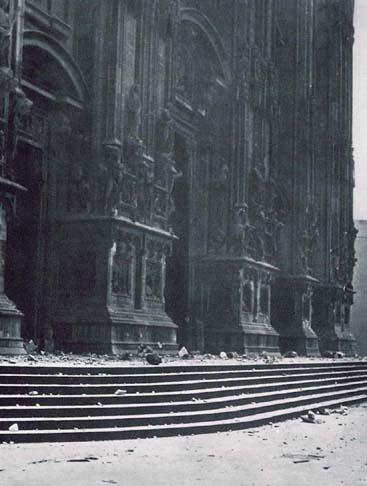
Year 1940
night between 15 and 16 June
Milan suffered the first air strike after only five days after the entry into the war .. The air-raid alarm was given at 1.48. Several buildings were hit, and he counted one dead and several wounded.
night between 16 and 17 June
At 22.30 the alarm sounded after the sighting of eight aircraft that flew over the skies of Milan. Second alarm at 0:23 for other bombers approaching from the south, then a warning fifteen minutes later, planes dropped flares in the area adjacent to the Caproni, who then was actually hit by about 25 bombs. At 1.00, reported air from the north to the south, to 2.00 release of bombs on the Milan-Laghi. Last alarm at 5.04, 6.22 and final all-clear. Damage is not significant.
night between 13 and 14 August
After nearly two months of calm, the alarm for 0:55 air from Como, Varese and Domodossola. Were dropped bombs and propaganda leaflets. We counted 15 dead and 44 injured due to attacks concentrated in the streets Sarpi, Settle, Moscow and Padua Avenue. Greek and other damages as a Messina. The DICAT fired numerous shots, but it can strike without hearing English.
night between 15 and 16 August
alarm at 0:40, but because of the flak DICAT, the British aircraft were freed of their loads of bombs on Merate and Mariano Comense. A Wellington aircraft was shot down, killing one of the five pilots.
night between 18 and 19 August
alarm at 0:40, 14 bombs were dropped (Innocenti Lambrate affected establishments, Caproni-Forlanini airport and seaplane base).
night between August 24 and 25
alarm at 0:49, but release of flares.
night between 26 and 27 August
arrivals between 1:00 and 3:00. No bombs dropped, two British aircraft shot down (one in the Ligurian Apennines, in an ARES).
night between 18 and 19 December
Bomber Command are alive after more remade three months of silence. The alarm lasted from 2 to 4:30: destroyed a farmhouse in Assam and hit the street in Milan Col di Lana (eight dead, 16 wounded).
Year 1942
If 1941 was passed without any mission of Bomber Command, who had preferred to concentrate its forces in other war scenarios, the 1942 (which seemed quite a year) showed the preparation and determination of the British in months October.
late afternoon of October 24
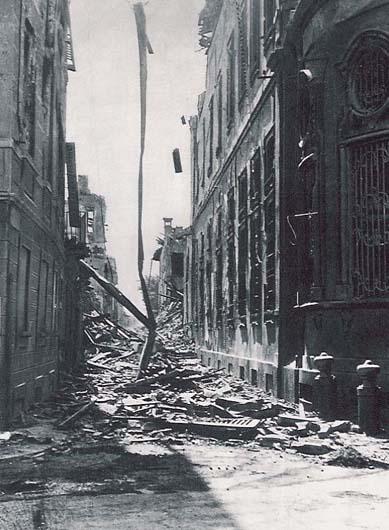
the town was taken by surprise when the sound of sirens was built over the noise of traffic at 17:57: first, because for more than a year the airplanes had deserted the skies of Milan, also because until then the attacks were always carried out during the night. But what most surprises was that the first bombs began to fall just three minutes after the alarm, which apparently was given with improper delay. Approximately 73 Lancaster aircraft are poured in waves over the city in a time of intense crowding and movement. The DICAT intervened already puzzled, trying to remedy a number of defensive mistakes (which in fact were reprimanded the next few days, even in the press). The bombs were of all sizes, including less than 12 pounds by 2000, more than 2,000 high-caliber incendiary bombs and more than 28,000 small calibro.La second phase of the attack was disturbed by the smoke of Fire broke out immediately, rising to five hundred meters shielding the sky. They rose in the air to intercept the bombers, five Air Force aircraft, without major successes. A Lancaster crashed to the ground by the parties in Segrate, killing perhaps attributable to the anti-installed at the Caproni. After the raid, 135 were found dead, 331 wounded, some of whom did not survive. Large areas of the city are damaged or destroyed. According to the report of the Prefecture, suffered serious damage to the buildings in Via Pantano, street course and Velasca Rome (now Roman gate) to the civic 7.9 and 10, two plants in the region and the area via S. Christopher, Piazza Tricolore, viale Montenero (from civic 72 to 76 and 73), via Archimede, Via Melloni, Slaughterhouse and the Farmer's Market (Victoria airport), via Messina, Lomazzo, Sarpi, Aleardi, Buenos Aires (number 33 and 58), square Bacon, via Oxilia (civic 23 to 29 and 26), by Saul (18 to 28). The San Vittore prison was damaged, and because of abatement of a perimeter wall and seguitone melee, hundreds of inmates fled. The disaster forced the municipality to provide schools and public buildings to house the homeless, while the citizens complained about the insufficiency of public shelters, which have proved a number less than the practical needs for shelter during the attacks.
night between 24 and 25 October
fires still raging caused dall'incursione afternoon, when at 22:44 Milan came upon other British bombers. However, the attack is considerably lower than during the day just made, because of the few aircraft that actually managed to reach the town, with the flock suffered many losses along the way (due to time and anti-Swiss). So many bombs scattered over the surrounding territory Milan, some even ended up on the Charterhouse of Pavia and Milan began Vigevano.Per thousands of displaced: every evening weekday masses huddled on the carrier and trains (but somebody had to make do bicycles) to spend the night, after a days of hard work in adjacent areas considered not subject to night bombing, finding home at premises made available by the end of 1942 contadini.Alla began to be reduced by the city transport network, mainly due to lack of spare parts. Many lines were deleted, and the races began to have a reduced frequency.
Year 1943
DICAT the beginning of the year, after having shown very little preparation and effectiveness, was joined by German Flak. Bomber Command had meanwhile been improved and perfected, and began the systematic destruction of cities tedesche.A Milan, meanwhile, fell to a daily ration of bread 150 grams, the bonds lost value and the population took hold barter only way to get a living.
night between 14 and 15 February
The warning sounded at 21.30, and after half an hour to 22:06, the great alarm. Lancaster began to drop about 138 bombs at 22:34. The route had been drawn from several pathfinder on Lake Maggiore. One plane was hit by flak and crashed at the bottom via Boffalora, the Barona. A crew member was not found, and one of the engines was unearthed in 1990, while working on the construction of two underground terminus Famagusta. During the attack were dropped 110 tons of explosive bombs and 166 tons of ordnance incendiari.La British reconnaissance to assess the damage inflicted was made four days after a plane De Havilland Mosquito. According to the report and interpret the pictures taken from above, are damaged, Alfa Romeo, Caproni, the Isotta Fraschini, the Centenera Zinelli and manufacturing and tobacco. Damage at the airport then flour, Porta Genova, Via Messina to the tram depot and bus station in Corso Sempione. In addition, 35 civilian areas damaged in the course Rome, at the Dome, the Arena, in Via Mario Pagano, Piazzale Loreto, the main station near the Italian universities Cattolica.Secondo pads the next few days, resulted in several bad movies, the central milk, other central Stipel more 203 case distrutte e 220 gravemente danneggiate, 376 con danni importanti, e più di 3000 quelle con danni lievi. Gravi danni subì il Corriere della Sera in via Solferino.Per quanto riguarda il patrimonio culturale ed artistico, danneggiate risultarono le chiese di: S.Maria del Carmine, S.Lorenzo, S.Giorgio al palazzo. Inoltre il palazzo Reale, la Pinacoteca Ambrosiana, la Permanente, la Galleria d'arte moderna, il Conservatorio.Per domare gli incendi dovettero intervenire anche i vigile del fuoco di Bologna, oltre a quelli di tutte le province vicine. Alle otto del mattino seguente riprese la circolazione dei tram e dei treni alla Stazione centrale.
Il conteggio dei morti si attestò su 133, con 442 feriti. I senza tetto risultarono 7.950, ma pochi giorni dopo quelli regolarmente registrati presso gli uffici comunali furono 10.000. La città subì un ulteriore svuotamento da parte della popolazione, sia perché rimasta senza una casa, sia per timore di ulteriori attacchi. Le scuole furono chiuse a tempo indeterminato, sia per il pericolo di bombardamenti, sia per mancanza di combustibile.
Notte tra il 7 e l'8 agosto
Il 25 luglio Mussolini era stato arrestato dopo la storica seduta del Gran Consiglio del fascismo, e tradotto sul Gran Sasso. Per accelerare la resa dell'Italia, venne allora programmato un ciclo di bombardamenti ferocissimi su Milano, che, secondo le intenzioni, dovevano distruggere la città entro un mese.Il primo di tali attacchi iniziò con l'allarme delle 0.52 dell'8 agosto, quando aerei nemici erano stati segnalati in passaggio sulla frontiera svizzera. Le bombe iniziarono a cadere alla 1.10. I Lancaster della RAF sganciano soprattutto bombe incendiarie: presto enormi cerchi di fuoco si propagarono a Porta Venezia, porta Garibaldi, in corso Sempione, Magenta e Ticinese. Il teatro Filodrammatici andò distrutto, così come gran parte del Corriere della Sera. Risultò inservibile l'ospedale Fatebenefratelli. Pesanti danni anche al museo di Storia naturale, al Castello, alla Villa Reale, al palazzo Sormani. In totale, si ebbero 600 edifici distrutti, sotto le cui macerie persero la vita 161 persone, più 281 feriti.La contraerea riuscì a colpire due Lancaster (Which fell in a street Gustavo Modena, the other to pieces, fell on the road Compagnoni and surroundings). The blackout was imposed on the city from 21.30 to 5.30. The nearest ATM managed to resume his duties only in the suburbs, since most of the main streets was impractical to vehicular, blocked with rubble and littered with potholes ..
night between 12 and 13 August
For this mission, the British Bomber Command mobilized all available equipment, and Milan were even sent 504 aircraft: 321 183 Halifax and Lancaster. The purpose of this deployment of forces was to create the city known as the vortex of fire (as theorized by the commands England the achievements of German cities), for total annihilation. For this reason, among the 2,000 tons of bombs delivered that night, there were 380,000 pieces incendiari.L 'alarm was given at 0.35, with a cloudless sky. Not even ten minutes later began the dropping of bombs and incendiary, all for about an hour. The anti-anything he could do. The center was the most affected area, but sparing the Ticino area, Garibaldi, Simplon. The fires broke out everywhere, with destructive effects on Palazzo Marino, the Police, the Commissioner Cathedral, the Castle, the church of San Fedele, Santa Maria delle Grazie (Last Supper, but not the "plaster" in the bags of sand), the Cathedral reported serious damage, as well as the gallery (once destroyed the building facade and "scrape"). The power of the fire was fed by the wind that had risen because of the fire itself, which drew air from the countryside to feed itself (it's the effect, greatly enlarged, that occurs when you open the door of a stove: the flames quickly regain their strength because they attract new oxygen from the outside). The scene must have seemed apocalyptic dawn: almost half of the city was in flames and the air totally unbearable, entire neighborhoods were unsafe. They were, however, restored some bus lines to facilitate the evacuation of the last remaining citizens, approximately 250,000 people.
night between 14 and 15 August
This time, 140 Lancaster came down in Milan at 12:32. In an hour, easily dropped their bombs, guided by the fires still burned in the previous attack that does not Domanti. Were re-centered the Castle, the Royal Palace, Teatro dal Verme theater and Verdi. Many industries heavily affected. The few citizens present gave relief to firefighters and oompah men to stop the devastating fury of the flames, but the business was slowed by the lack of water caused by the destruction of the pipes of the aqueduct.
night between 15 and 16 August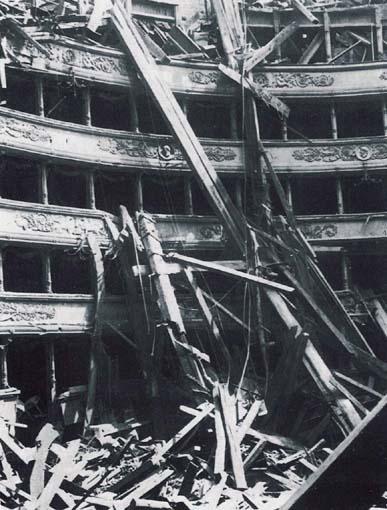
The third attack programmed cycle sounded the alarm at 0:31. Not all 199 Lancaster took off from England this time they reached Milan, in an unfortunate night for them. Most unfortunate it is for the city: entire neighborhoods were bombed. We report only: State Archives (huge paper losses), the Duomo, La Scala, which had broken through the roof (which will be covered with temporary shelters until the beginning of restoration work), Rinascente (totally destroyed, then demolished because non-recoverable). The newspapers came out the next night, in limited editions, partly because of the lack of paper to the presses. The city was a prey to fire and covered with rubble, and the Bomber Command decided to stop, even if dissatisfied. In fact, the total destruction of the city appeared an impossible task, for two ragioni.Innanzitutto as construction of buildings (very little wood), and the thermal inversion that makes all the sultry days of August: the extreme heat and humidity even at night levels close to 90% prevented the air to circulate, why the fire did not spread as easily never that occurred on German cities. In addition, the armistice was now near useless to insist.
The terrible attacks of August had affected 50% of the buildings, of which 15% severely damaged. The homeless were at least 250,000, and 300,000 displaced. To remove le macerie si reclutarono con difficoltà 5.000 operai, oltre a 1.700 militari. La maggior parte degli sgomberi e delle messe in sicurezza fu affidata alla manovalanza ormai esperta della ditta Romanoni (che dall'inizio del conflitto aveva vinto l'appalto per tali incombenze).Il servizio di trasporto pubblico fu quello che ne uscì più disastrato (acqua, luce e gas erano infatti ripresi entro le 48 ore). I tram e le filovie erano totalmente distrutti, così come le rimesse, devastate dagli incendi. Dalle vetture meno danneggiato si recuperano i pezzi per rendere efficienti pochi tram, in una sorta di cannibalismo meccanico. Inoltre, con la rete di alimentazione aerea danneggiata (i palazzi crollando avevano travolto in centinaia di punti i fili della current) also called into the tram service had circulation problems. Initially they were used so the little steam locomotives of the leg of wood (which were so removed from the suburban services), which, with the trailers of luck, they could guarantee at least a few lines, especially to connect the railway stations.
Merciful was the spectacle of the monuments of Milan: in all, the morning of August 16 was devoted to a survey of the scale, as mentioned centered in the middle of a large bomb. The boxes appeared severely damaged, only the stage, greatly restored in the thirties, had been saved thanks to the metal curtain that had prevented the fire from spreading. To avoid the rain and the chill of winter destroy all that escaped during the month of September was designed and put in place a temporary covering road, to protect the boxes and decorative friezes. The roof was made of makeshift materials, mainly wood and roofing felt. Just finished a conflict would have been possible to complete the renovation and restoration of the theater.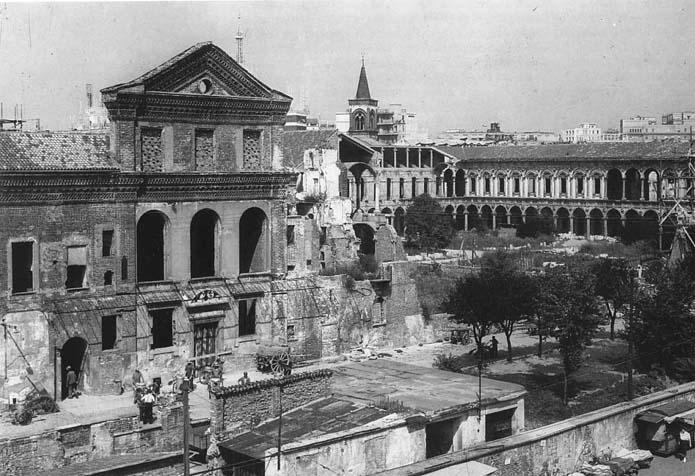
Santa Maria delle Grazie, except in the Upper Room, he left it partially crippled. Bramante's dome is somewhat damaged, as well as the cloister and the fountain in the middle, hit by a bomb. The small cloister was hit, but the fire had been bravely propagatosi off from the work of friars.
Finally, the Hospital, the historic Ca Granda, was hit by six or seven bombs caliber. Was destroyed the central courtyard, which lost the arcades. The cloisters were also affected side. It will take decades before we can see the restored ancient hospital complex. The September 8
gave Italy an armistice on November 24 Mussolini gave birth to the Italian Social Republic.
With the coming of winter had to pull down hundreds of trees (among the survivors of the fire) to feed the stoves at home.
Year 1944
After the armistice, while the Anglo-Americans from southern Italy dating back slowly now free, Milan came under the control of the Germans, aided by independent teams of fascists such as the "Ettore Muti".
night between 28 and 29 March
starting from Puglia, 78 Wellington arrived in Milan at 22.40. The attack focused on the scale of Lambrate. The alarm was sounded late, ten minutes before the launch of Bengal and on Rogoredo Affori, so much so that the flak, even if alerted, did not hit enemy aircraft. The damage to the rail system were enormous: about 300 cars destroyed, laid waste to Segrate and binaries. They were also affected numerous roads and streets adjacent to stops attached, with a budget of 18 dead and 45 wounded.
Morning of March 29
12.15 si presentarono sulla città, ancora nel caos per l'attacco notturno, poco meno di 139 aerei (tanti erano partiti dalla Puglia, ma alcuni si erano dovuti ritirare prima di sferrare l'attacco). L'allarme fu dato col dovuto anticipo, alle 11.40, e le prime detonazioni si udirono su Lambrate, vero obiettivo del bombardamento. Distrutte risultarono cinque cabine di manovra, almeno 5 km di binari e impianti, tutta la linea di elettrificazione aerea, 5 locomotive e circa 500 vagoni. Anche se l'attacco si era rivolto al materiale rotabile, ci furono almeno 30 morti tra Rogoredo, via Corelli, via Tertulliano, e Ronchetto sul Naviglio. Anche in questa occasione la contraerea nulla poté: anche se in mano alla Flak tedesca, con l'ausilio della'AR.CO. (Anti-aircraft artillery), the results were disappointing as when it was operated by purely indicative.
morning of April 30
The alarm rang at 11:38 at noon the first bombs began to fall. The bombers were divided into two groups, with two specific targets: Breda, aircraft construction section, and the airport Lambrate. The Breda turned semi destroyed, reduced to ashes the airport saw 32 locomotives, 100 wagons, the workshop increase (plus 22 breaks track).
night between 5 and 6 April
At 20:50 of the 205th British planes dropped bombs on Lambrate Group. There are no official records of the mission, we assume an error of goal.
Notte tra il 10 e l'11 luglio
Alle 23.45 vennero lanciati razzi illuminanti, data la forte foschia afosa presente nell'aria, poi 86 Wellington inglesi si scatenarono di nuovo su Lambrate: la volontà strategica era quella di annientare il principale scalo ferroviario di Milano, dal quale passavano le merci per le industrie convertite dai tedeschi alla produzione di materiale militare. Danni limitati.
Notte tra il 13 e il 14 luglio
Il 205° Group inglese inviò per distruggere Lambrate 89 aerei, e l'allarme suonò alle 23.32. Per la prima volta la contraerea riuscì a mettere in difficoltà i bombardieri, due dei quali vennero colpiti. I danni allo scalo risultarono facilmente rimediabili, proprio because of the bad luck that night hit the British.
End of July and August
In these summer months the attacks from the sky were concentrated on the roads, means of transport and companies in the area around Milan. Were bombed the bridges over the Ticino and Boffalora Turbigo, the bridge to sull'Oglio two Palazzolo.Il August 24 Liberator of the 34th Squadron South African cast on Milan propaganda leaflets.
the night of Sept. 5 and Sept. 6 were dropped from the bombs, which hit a building in the square and the school via Morbegno Russo. The Breda di Sesto San Giovanni was hit by several bombs caliber minore.Nella night between 10 and 11 September flew over many devices Milan, affecting only a few buildings with no strategic interest, probably due to a positional error.
Morning of October 20
At 11:14 the little alarm was given, followed too soon by the great alarm, at 11:24. The first bombs began to hit at 11.29, or about a quarter of an hour. The population was therefore not the time to properly secure. The areas affected were those adjacent to the airport Lambrate, with tragic consequences for the civilian population. This fact was the most harrowing of the bombing, the destruction of the elementary school Gorla. Here, when the first alarm sounded, the teachers urged the children to store pencils, notebooks and folders, and starting in the underground shelter. However, during the descent down the stairs of the school, the second alarm sounded, so unexpected (because the first had been given only ten minutes earlier) can be interpreted by some as the all-clear. When on the stairs at a time of great uncertainty and conflicting voices, they found themselves crammed around two hundred children and school staff, a bomb fell (presumably) 250 pounds, hitting right in the stairwell and its cargo of small lives. 170 other bombs fell on the neighborhood and Turro and precooked, wreaking havoc and grief in families. At the end of the raid, including school children and victims of the civil districts affected, the dead were about 614.
November
The autumn months, however, having seen numerous attacks targeting locations adjacent to Milan, which, however, Lodi, Codogno, mainly to destroy factories or stop trains. The city suffered sporadic bombings, but always isolated bombs, perhaps the result of mistakes or emergency release.
December
As the previous month, continued attacks on places of Milan, while the city was largely spared (call Lambrate locomotive shed Greek, Breda, the Roman port). The attacks continue and spread out the last months of 1944 had caused great fear in the population whenever they were to organize uno spostamento con mezzi di trasporto (treni, tram extraurbani, ma anche corriere, auto private, carretti e perfino biciclette erano diventati gli obiettivi preferiti degli aeroplani).
Anno 1945
Milano iniziò l'ultimo anno di guerra in condizioni disperate ma ancora organizzata: si pensi alle numerose mense collettive predisposte dal Comune per supplire ai bisogni della cittadinanza, spesso impossibilitata a procurarsi il cibo o privata di una casa per cucinarlo. Se ne contavano in corso Indipendenza, in via Cimarosa, in via Verdi, in piazza Diaz (in un capannone che sorgeva dove ora c'è il giardino e il monumento ai Carabinieri), in piazzale Maciachini, in viale Padova, in piazzale Accursio. Intanto, tutte le città del Nord Italia risultavano ormai indifese, sotto i continui bombardamenti e mitragliamenti da parte dell'aviazione anglo-americana.
Gennaio
Milano subì numerosi piccoli attacchi, prevalentemente concentrati su scali ferroviari o su convogli appena usciti dalle stazioni. Si susseguivano incessantemente gli attacchi ai mezzi di trasporto, senza distinguere purtroppo fra treni che portavano merci e materiale militare in Germania (attraverso la Svizzera) e convogli carichi di operai e sfollati, come quel Gamba de Legn colpito da un caccia nella tratta fra Inveruno e Cuggiono (10 morti e 40 feriti).
Febbraio-Aprile
Ancora piccoli attacchi, per un totale di 14, che causarono circa 28 morti and eighty wounded. The last was recorded on 12 (machine guns at grade along the Via Manzoni) and the 13.Il April 25, who became just the dark, Mussolini left Milan to Como. On 30 April the British troops entered the city of the U.S. Fifth Army, the war was over. Conclusions
The sixty air strikes caused the city of Milan between 1200 and 2000 deaths.
Roughly, the city lost a third of its buildings destroyed directly by the raids, fires caused by them or for demolition later made necessary or are considered cheaper than restoration. By the enormous mass of debris cleared from the ground rose the city of San Montagnetta Siro to QT8 (the fourth model of the thirties). Even today, however, remains survive citizens who remember the terrible attacks (eg, the building to shreds at the junction of five streets, just off Via Santa Marta). Of the 80,000 trees
citizens present in 1942, at the end of the war if they only census of 30,000. For many years the homeless had to live in small houses set up by the city, built the city limits, such as those in Avenue Argonne, halfway up the street Lorenteggio in San Siro. The
May 11, 1946, at 21, he inaugurated the revived La Scala, the concert conducted by Arturo Toscanini and music by Rossini, Verdi, Puccini, Boito.
The first step of a slow normal to find.
Part I: The scenario Objective Milan
In 1940 Milan was held by the British a major military target, being the most developed industrial city of Italy and one of the most important in Europe, located within the industrial triangle, with Turin and Genoa. The information service industry
English, even before the conflict dl, had received detailed information and maps of all major production companies and the province of Milan, among which the Alfa Romeo, Edward Bianchi, Officine Galileo, Magneti Marelli, workshops Borletti, the Italian Tecnomasio Brown Boveri, Pirelli, Isotta Fraschini, Breda, Caproni, and Ansaldo, but not last, Falk steelworks.
The city was also considered one of the major railway hubs in the country, characterized by 21 railway lines, from one of the larger stations of Europe and by important freight yards, including Lambrate Farini, joints are vital to these industries. The reports prepared
already begun pointing to a conflict in a million and one hundred thousand inhabitants of the city, the same studies described divided in concentric circles, the innermost of which (the old town, inside the ring of canals) also appeared to be the more vulnerable to intense air attack, and because most populated, and for the closeness of their construction, mostly with narrow streets. It was expected that, if even by incendiary bombing, an easy spread of fire, but noted that the same relations SINCE spy regret the material used for the construction of buildings, and that is almost entirely brick and cement, because of greater difficulty in this spread of fire, which instead had given great results in the German cities, where the abundant use of wood materials.
In light of this, the systematic bombing was at first (until the end of 1943) aimed to hit the city "civilized", focusing on houses and people, so terrified that pushed the government to seek an armistice; in a second time (since 1944) got excited about and war production factories, enslaved to the needs of Germany. The city's defenses
Defense from attacks from the sky was initially assigned to the Fifth Legion ("The Visconti") of the Militia Di.ca.t. (Anti-aircraft defense planning), which boasted, among officers, NCOs and soldiers, nearly 9,000 people, located both in the city and the rest of the Milan area, located in strategic areas and ready at all times to strafe the enemy airplanes. Even some large factories were equipped with their own anti-aircraft batteries, normally placed on the roofs of buildings. After the October 1942
poured in some departments of Italy Flakartillerie German Luftwaffe dependent, to give a hand to DICAT, whose ability to defend the skies had turned very low, so as to be almost feared by the bombers.
The German batteries were placed close to the Italian ones in order to take advantage of the already established communications links. After the armistice, the DICAT disbanded, the defense of heaven belongs exclusively to the German Flak, so that was enhanced by using the staff of the Italian Social Republic Italian. In addition to the defense held off the ground, were always ready to come off in flight, the fighter of the Royal Air Force, stationed at airports and Venegono Lonate Pozzolo (appliances Macchi C 202 and Fiat CR 42, plus some of the Luftwaffe's Messerschmitt Bf 109).
The last step of the defense was entrusted to men of the UNPA (National Union of Air Protection), and Capifabbricato, one for each building, the latter with the task of ensuring the efficiency of any air raid shelters, emergency exits and fire hydrants, and check that the block was adequately obscured, namely, that all the apartment windows were masked with blue paper, first truly passive defense against night raids (even the headlights of trams, buses, cars and bicycles had only a small slit for the projection of light, and the fenders painted white).
The population was warned of impending danger from a first small air alarm (siren), which, at least when even the anti-aircraft and sightings were able to accomplish their task, was given thirty minutes early attack. Then came a second siren, great alarm, which minutes ahead of the first releases of bombs.
citizens had then (in theory at least) time to reach the cellar shelter (for buildings designed or otherwise equipped to the case) or the collective shelters near you. The caretakers of the buildings were also responsible, during the attacks, to throw open the doors, to allow past dall'incursione surprised to shelter in the hallways.
bombers
order to fully understand the destructive power of an Allied air raid, but it is appropriate to devote a few significant lines to equipment used for the raids: - in 1940, the British Bomber Command made use of twin-engine Armstrong Witworth Whitley, whose planes loaded with bombs had to be curtailed because of the long journey that would take (England-Milan and back), then no more than 2,000 pounds;
- from ' autumn 1942 until the summer of 1943, Bomber Command used instead of the family jewels, the four-engined Stirling (each capable of carrying 6,000 pounds of bombs), Halifax (5,800 kg) and Lancaster (6,500 kg). It was also used the twin-engine Wellington, the De Havilland Mosquito (twin for reconnaissance, which were systematically taken from photographs of the post-bombing) and the famous Spitfire, hunting for ground reconnaissance and machine guns;
- dal 1943, gli attacchi vennero affidati alla MAAF (Mediterranean allied air force) e alla USAAF, utilizzando quadrimotori Boeing B 17 Flying Fortress (le fortezze volanti) e B 24 Liberator, dotati di carichi distruttivi inferiori a quelli inglesi. Tali aerei decollavano dalla Puglia e dalla Campania, ormai liberate dal giogo nazi-fascista;
- nell'ultimo periodo di guerra, volarono su Milano anche altri aerei statunitensi, tra i quali il Republic P 47 Thunderbolt, dagli Italiani ribattezzato Pippo, tragicamente famoso per incursioni solitarie sia notturne che diurne per mitragliamento di strade e ferrovie.
Per quanto riguarda le bombe aviotrasportate, gli Inglesi utilizzarono bombe incendiarie di piccole dimensioni e classiche bombe da 250, 500, 1000 e 2000 chilogrammi. Raramente anche bombe da 6000 chili.
Gli aerei statunitensi erano equipaggiati con bombe da 250 e 500 chili, ad alto esplosivo e dirompenti.
Modalità degli attacchi
Gli attacchi su Milano (come del resto su altre città) furono inizialmente solo notturni: gli aerei inglesi decollavano da basi posizionate nel sud dell'Inghilterra verso l'ora di cena, attraversavano nella serata i cieli della Francia, occupata dall'esercito di Hitler, varcavano le Alpi e a mezzanotte piombavano sulla città, dove restavano per circa un'ora, per poi far ritorno alle loro basi.
Svolgendosi al buio, e non potendosi sempre contare su cieli tersi e lune piene, l'incursione era preceduta by the passage of air known as "pathfinder", ie segnastrada, throwing waves of bright flares show the route the bombers and objectives.
After 1943, the USAAF air attacks instead of days, at all hours, with greater risk of being killed, but more likely to hit the targets set. Usually in the morning took off from Puglia, flew over the Adriatic, and the Romagna viravano focusing on Milan. In return, the aircraft had the chance, now freed of the enormous weight of the bombs, machine guns to hunt freely, across what they thought was good hit (moving trains, buses, military columns in the displacement).
Part II: Chronology of bombings
Year 1940
night between 15 and 16 June
Milan suffered the first air strike after only five days after the entry into the war .. The air-raid alarm was given at 1.48. Several buildings were hit, and he counted one dead and several wounded.
night between 16 and 17 June
At 22.30 the alarm sounded after the sighting of eight aircraft that flew over the skies of Milan. Second alarm at 0:23 for other bombers approaching from the south, then a warning fifteen minutes later, planes dropped flares in the area adjacent to the Caproni, who then was actually hit by about 25 bombs. At 1.00, reported air from the north to the south, to 2.00 release of bombs on the Milan-Laghi. Last alarm at 5.04, 6.22 and final all-clear. Damage is not significant.
night between 13 and 14 August
After nearly two months of calm, the alarm for 0:55 air from Como, Varese and Domodossola. Were dropped bombs and propaganda leaflets. We counted 15 dead and 44 injured due to attacks concentrated in the streets Sarpi, Settle, Moscow and Padua Avenue. Greek and other damages as a Messina. The DICAT fired numerous shots, but it can strike without hearing English.
night between 15 and 16 August
alarm at 0:40, but because of the flak DICAT, the British aircraft were freed of their loads of bombs on Merate and Mariano Comense. A Wellington aircraft was shot down, killing one of the five pilots.
night between 18 and 19 August
alarm at 0:40, 14 bombs were dropped (Innocenti Lambrate affected establishments, Caproni-Forlanini airport and seaplane base).
night between August 24 and 25
alarm at 0:49, but release of flares.
night between 26 and 27 August
arrivals between 1:00 and 3:00. No bombs dropped, two British aircraft shot down (one in the Ligurian Apennines, in an ARES).
night between 18 and 19 December
Bomber Command are alive after more remade three months of silence. The alarm lasted from 2 to 4:30: destroyed a farmhouse in Assam and hit the street in Milan Col di Lana (eight dead, 16 wounded).
Year 1942
If 1941 was passed without any mission of Bomber Command, who had preferred to concentrate its forces in other war scenarios, the 1942 (which seemed quite a year) showed the preparation and determination of the British in months October.
late afternoon of October 24
the town was taken by surprise when the sound of sirens was built over the noise of traffic at 17:57: first, because for more than a year the airplanes had deserted the skies of Milan, also because until then the attacks were always carried out during the night. But what most surprises was that the first bombs began to fall just three minutes after the alarm, which apparently was given with improper delay. Approximately 73 Lancaster aircraft are poured in waves over the city in a time of intense crowding and movement. The DICAT intervened already puzzled, trying to remedy a number of defensive mistakes (which in fact were reprimanded the next few days, even in the press). The bombs were of all sizes, including less than 12 pounds by 2000, more than 2,000 high-caliber incendiary bombs and more than 28,000 small calibro.La second phase of the attack was disturbed by the smoke of Fire broke out immediately, rising to five hundred meters shielding the sky. They rose in the air to intercept the bombers, five Air Force aircraft, without major successes. A Lancaster crashed to the ground by the parties in Segrate, killing perhaps attributable to the anti-installed at the Caproni. After the raid, 135 were found dead, 331 wounded, some of whom did not survive. Large areas of the city are damaged or destroyed. According to the report of the Prefecture, suffered serious damage to the buildings in Via Pantano, street course and Velasca Rome (now Roman gate) to the civic 7.9 and 10, two plants in the region and the area via S. Christopher, Piazza Tricolore, viale Montenero (from civic 72 to 76 and 73), via Archimede, Via Melloni, Slaughterhouse and the Farmer's Market (Victoria airport), via Messina, Lomazzo, Sarpi, Aleardi, Buenos Aires (number 33 and 58), square Bacon, via Oxilia (civic 23 to 29 and 26), by Saul (18 to 28). The San Vittore prison was damaged, and because of abatement of a perimeter wall and seguitone melee, hundreds of inmates fled. The disaster forced the municipality to provide schools and public buildings to house the homeless, while the citizens complained about the insufficiency of public shelters, which have proved a number less than the practical needs for shelter during the attacks.
night between 24 and 25 October
fires still raging caused dall'incursione afternoon, when at 22:44 Milan came upon other British bombers. However, the attack is considerably lower than during the day just made, because of the few aircraft that actually managed to reach the town, with the flock suffered many losses along the way (due to time and anti-Swiss). So many bombs scattered over the surrounding territory Milan, some even ended up on the Charterhouse of Pavia and Milan began Vigevano.Per thousands of displaced: every evening weekday masses huddled on the carrier and trains (but somebody had to make do bicycles) to spend the night, after a days of hard work in adjacent areas considered not subject to night bombing, finding home at premises made available by the end of 1942 contadini.Alla began to be reduced by the city transport network, mainly due to lack of spare parts. Many lines were deleted, and the races began to have a reduced frequency.
Year 1943
DICAT the beginning of the year, after having shown very little preparation and effectiveness, was joined by German Flak. Bomber Command had meanwhile been improved and perfected, and began the systematic destruction of cities tedesche.A Milan, meanwhile, fell to a daily ration of bread 150 grams, the bonds lost value and the population took hold barter only way to get a living.
night between 14 and 15 February
The warning sounded at 21.30, and after half an hour to 22:06, the great alarm. Lancaster began to drop about 138 bombs at 22:34. The route had been drawn from several pathfinder on Lake Maggiore. One plane was hit by flak and crashed at the bottom via Boffalora, the Barona. A crew member was not found, and one of the engines was unearthed in 1990, while working on the construction of two underground terminus Famagusta. During the attack were dropped 110 tons of explosive bombs and 166 tons of ordnance incendiari.La British reconnaissance to assess the damage inflicted was made four days after a plane De Havilland Mosquito. According to the report and interpret the pictures taken from above, are damaged, Alfa Romeo, Caproni, the Isotta Fraschini, the Centenera Zinelli and manufacturing and tobacco. Damage at the airport then flour, Porta Genova, Via Messina to the tram depot and bus station in Corso Sempione. In addition, 35 civilian areas damaged in the course Rome, at the Dome, the Arena, in Via Mario Pagano, Piazzale Loreto, the main station near the Italian universities Cattolica.Secondo pads the next few days, resulted in several bad movies, the central milk, other central Stipel more 203 case distrutte e 220 gravemente danneggiate, 376 con danni importanti, e più di 3000 quelle con danni lievi. Gravi danni subì il Corriere della Sera in via Solferino.Per quanto riguarda il patrimonio culturale ed artistico, danneggiate risultarono le chiese di: S.Maria del Carmine, S.Lorenzo, S.Giorgio al palazzo. Inoltre il palazzo Reale, la Pinacoteca Ambrosiana, la Permanente, la Galleria d'arte moderna, il Conservatorio.Per domare gli incendi dovettero intervenire anche i vigile del fuoco di Bologna, oltre a quelli di tutte le province vicine. Alle otto del mattino seguente riprese la circolazione dei tram e dei treni alla Stazione centrale.
Il conteggio dei morti si attestò su 133, con 442 feriti. I senza tetto risultarono 7.950, ma pochi giorni dopo quelli regolarmente registrati presso gli uffici comunali furono 10.000. La città subì un ulteriore svuotamento da parte della popolazione, sia perché rimasta senza una casa, sia per timore di ulteriori attacchi. Le scuole furono chiuse a tempo indeterminato, sia per il pericolo di bombardamenti, sia per mancanza di combustibile.
Notte tra il 7 e l'8 agosto
Il 25 luglio Mussolini era stato arrestato dopo la storica seduta del Gran Consiglio del fascismo, e tradotto sul Gran Sasso. Per accelerare la resa dell'Italia, venne allora programmato un ciclo di bombardamenti ferocissimi su Milano, che, secondo le intenzioni, dovevano distruggere la città entro un mese.Il primo di tali attacchi iniziò con l'allarme delle 0.52 dell'8 agosto, quando aerei nemici erano stati segnalati in passaggio sulla frontiera svizzera. Le bombe iniziarono a cadere alla 1.10. I Lancaster della RAF sganciano soprattutto bombe incendiarie: presto enormi cerchi di fuoco si propagarono a Porta Venezia, porta Garibaldi, in corso Sempione, Magenta e Ticinese. Il teatro Filodrammatici andò distrutto, così come gran parte del Corriere della Sera. Risultò inservibile l'ospedale Fatebenefratelli. Pesanti danni anche al museo di Storia naturale, al Castello, alla Villa Reale, al palazzo Sormani. In totale, si ebbero 600 edifici distrutti, sotto le cui macerie persero la vita 161 persone, più 281 feriti.La contraerea riuscì a colpire due Lancaster (Which fell in a street Gustavo Modena, the other to pieces, fell on the road Compagnoni and surroundings). The blackout was imposed on the city from 21.30 to 5.30. The nearest ATM managed to resume his duties only in the suburbs, since most of the main streets was impractical to vehicular, blocked with rubble and littered with potholes ..
night between 12 and 13 August
For this mission, the British Bomber Command mobilized all available equipment, and Milan were even sent 504 aircraft: 321 183 Halifax and Lancaster. The purpose of this deployment of forces was to create the city known as the vortex of fire (as theorized by the commands England the achievements of German cities), for total annihilation. For this reason, among the 2,000 tons of bombs delivered that night, there were 380,000 pieces incendiari.L 'alarm was given at 0.35, with a cloudless sky. Not even ten minutes later began the dropping of bombs and incendiary, all for about an hour. The anti-anything he could do. The center was the most affected area, but sparing the Ticino area, Garibaldi, Simplon. The fires broke out everywhere, with destructive effects on Palazzo Marino, the Police, the Commissioner Cathedral, the Castle, the church of San Fedele, Santa Maria delle Grazie (Last Supper, but not the "plaster" in the bags of sand), the Cathedral reported serious damage, as well as the gallery (once destroyed the building facade and "scrape"). The power of the fire was fed by the wind that had risen because of the fire itself, which drew air from the countryside to feed itself (it's the effect, greatly enlarged, that occurs when you open the door of a stove: the flames quickly regain their strength because they attract new oxygen from the outside). The scene must have seemed apocalyptic dawn: almost half of the city was in flames and the air totally unbearable, entire neighborhoods were unsafe. They were, however, restored some bus lines to facilitate the evacuation of the last remaining citizens, approximately 250,000 people.
night between 14 and 15 August
This time, 140 Lancaster came down in Milan at 12:32. In an hour, easily dropped their bombs, guided by the fires still burned in the previous attack that does not Domanti. Were re-centered the Castle, the Royal Palace, Teatro dal Verme theater and Verdi. Many industries heavily affected. The few citizens present gave relief to firefighters and oompah men to stop the devastating fury of the flames, but the business was slowed by the lack of water caused by the destruction of the pipes of the aqueduct.
night between 15 and 16 August
The third attack programmed cycle sounded the alarm at 0:31. Not all 199 Lancaster took off from England this time they reached Milan, in an unfortunate night for them. Most unfortunate it is for the city: entire neighborhoods were bombed. We report only: State Archives (huge paper losses), the Duomo, La Scala, which had broken through the roof (which will be covered with temporary shelters until the beginning of restoration work), Rinascente (totally destroyed, then demolished because non-recoverable). The newspapers came out the next night, in limited editions, partly because of the lack of paper to the presses. The city was a prey to fire and covered with rubble, and the Bomber Command decided to stop, even if dissatisfied. In fact, the total destruction of the city appeared an impossible task, for two ragioni.Innanzitutto as construction of buildings (very little wood), and the thermal inversion that makes all the sultry days of August: the extreme heat and humidity even at night levels close to 90% prevented the air to circulate, why the fire did not spread as easily never that occurred on German cities. In addition, the armistice was now near useless to insist.
The terrible attacks of August had affected 50% of the buildings, of which 15% severely damaged. The homeless were at least 250,000, and 300,000 displaced. To remove le macerie si reclutarono con difficoltà 5.000 operai, oltre a 1.700 militari. La maggior parte degli sgomberi e delle messe in sicurezza fu affidata alla manovalanza ormai esperta della ditta Romanoni (che dall'inizio del conflitto aveva vinto l'appalto per tali incombenze).Il servizio di trasporto pubblico fu quello che ne uscì più disastrato (acqua, luce e gas erano infatti ripresi entro le 48 ore). I tram e le filovie erano totalmente distrutti, così come le rimesse, devastate dagli incendi. Dalle vetture meno danneggiato si recuperano i pezzi per rendere efficienti pochi tram, in una sorta di cannibalismo meccanico. Inoltre, con la rete di alimentazione aerea danneggiata (i palazzi crollando avevano travolto in centinaia di punti i fili della current) also called into the tram service had circulation problems. Initially they were used so the little steam locomotives of the leg of wood (which were so removed from the suburban services), which, with the trailers of luck, they could guarantee at least a few lines, especially to connect the railway stations.
Merciful was the spectacle of the monuments of Milan: in all, the morning of August 16 was devoted to a survey of the scale, as mentioned centered in the middle of a large bomb. The boxes appeared severely damaged, only the stage, greatly restored in the thirties, had been saved thanks to the metal curtain that had prevented the fire from spreading. To avoid the rain and the chill of winter destroy all that escaped during the month of September was designed and put in place a temporary covering road, to protect the boxes and decorative friezes. The roof was made of makeshift materials, mainly wood and roofing felt. Just finished a conflict would have been possible to complete the renovation and restoration of the theater.
Santa Maria delle Grazie, except in the Upper Room, he left it partially crippled. Bramante's dome is somewhat damaged, as well as the cloister and the fountain in the middle, hit by a bomb. The small cloister was hit, but the fire had been bravely propagatosi off from the work of friars.
Finally, the Hospital, the historic Ca Granda, was hit by six or seven bombs caliber. Was destroyed the central courtyard, which lost the arcades. The cloisters were also affected side. It will take decades before we can see the restored ancient hospital complex. The September 8
gave Italy an armistice on November 24 Mussolini gave birth to the Italian Social Republic.
With the coming of winter had to pull down hundreds of trees (among the survivors of the fire) to feed the stoves at home.
Year 1944
After the armistice, while the Anglo-Americans from southern Italy dating back slowly now free, Milan came under the control of the Germans, aided by independent teams of fascists such as the "Ettore Muti".
night between 28 and 29 March
starting from Puglia, 78 Wellington arrived in Milan at 22.40. The attack focused on the scale of Lambrate. The alarm was sounded late, ten minutes before the launch of Bengal and on Rogoredo Affori, so much so that the flak, even if alerted, did not hit enemy aircraft. The damage to the rail system were enormous: about 300 cars destroyed, laid waste to Segrate and binaries. They were also affected numerous roads and streets adjacent to stops attached, with a budget of 18 dead and 45 wounded.
Morning of March 29
12.15 si presentarono sulla città, ancora nel caos per l'attacco notturno, poco meno di 139 aerei (tanti erano partiti dalla Puglia, ma alcuni si erano dovuti ritirare prima di sferrare l'attacco). L'allarme fu dato col dovuto anticipo, alle 11.40, e le prime detonazioni si udirono su Lambrate, vero obiettivo del bombardamento. Distrutte risultarono cinque cabine di manovra, almeno 5 km di binari e impianti, tutta la linea di elettrificazione aerea, 5 locomotive e circa 500 vagoni. Anche se l'attacco si era rivolto al materiale rotabile, ci furono almeno 30 morti tra Rogoredo, via Corelli, via Tertulliano, e Ronchetto sul Naviglio. Anche in questa occasione la contraerea nulla poté: anche se in mano alla Flak tedesca, con l'ausilio della'AR.CO. (Anti-aircraft artillery), the results were disappointing as when it was operated by purely indicative.
morning of April 30
The alarm rang at 11:38 at noon the first bombs began to fall. The bombers were divided into two groups, with two specific targets: Breda, aircraft construction section, and the airport Lambrate. The Breda turned semi destroyed, reduced to ashes the airport saw 32 locomotives, 100 wagons, the workshop increase (plus 22 breaks track).
night between 5 and 6 April
At 20:50 of the 205th British planes dropped bombs on Lambrate Group. There are no official records of the mission, we assume an error of goal.
Notte tra il 10 e l'11 luglio
Alle 23.45 vennero lanciati razzi illuminanti, data la forte foschia afosa presente nell'aria, poi 86 Wellington inglesi si scatenarono di nuovo su Lambrate: la volontà strategica era quella di annientare il principale scalo ferroviario di Milano, dal quale passavano le merci per le industrie convertite dai tedeschi alla produzione di materiale militare. Danni limitati.
Notte tra il 13 e il 14 luglio
Il 205° Group inglese inviò per distruggere Lambrate 89 aerei, e l'allarme suonò alle 23.32. Per la prima volta la contraerea riuscì a mettere in difficoltà i bombardieri, due dei quali vennero colpiti. I danni allo scalo risultarono facilmente rimediabili, proprio because of the bad luck that night hit the British.
End of July and August
In these summer months the attacks from the sky were concentrated on the roads, means of transport and companies in the area around Milan. Were bombed the bridges over the Ticino and Boffalora Turbigo, the bridge to sull'Oglio two Palazzolo.Il August 24 Liberator of the 34th Squadron South African cast on Milan propaganda leaflets.
the night of Sept. 5 and Sept. 6 were dropped from the bombs, which hit a building in the square and the school via Morbegno Russo. The Breda di Sesto San Giovanni was hit by several bombs caliber minore.Nella night between 10 and 11 September flew over many devices Milan, affecting only a few buildings with no strategic interest, probably due to a positional error.
Morning of October 20
At 11:14 the little alarm was given, followed too soon by the great alarm, at 11:24. The first bombs began to hit at 11.29, or about a quarter of an hour. The population was therefore not the time to properly secure. The areas affected were those adjacent to the airport Lambrate, with tragic consequences for the civilian population. This fact was the most harrowing of the bombing, the destruction of the elementary school Gorla. Here, when the first alarm sounded, the teachers urged the children to store pencils, notebooks and folders, and starting in the underground shelter. However, during the descent down the stairs of the school, the second alarm sounded, so unexpected (because the first had been given only ten minutes earlier) can be interpreted by some as the all-clear. When on the stairs at a time of great uncertainty and conflicting voices, they found themselves crammed around two hundred children and school staff, a bomb fell (presumably) 250 pounds, hitting right in the stairwell and its cargo of small lives. 170 other bombs fell on the neighborhood and Turro and precooked, wreaking havoc and grief in families. At the end of the raid, including school children and victims of the civil districts affected, the dead were about 614.
November
The autumn months, however, having seen numerous attacks targeting locations adjacent to Milan, which, however, Lodi, Codogno, mainly to destroy factories or stop trains. The city suffered sporadic bombings, but always isolated bombs, perhaps the result of mistakes or emergency release.
December
As the previous month, continued attacks on places of Milan, while the city was largely spared (call Lambrate locomotive shed Greek, Breda, the Roman port). The attacks continue and spread out the last months of 1944 had caused great fear in the population whenever they were to organize uno spostamento con mezzi di trasporto (treni, tram extraurbani, ma anche corriere, auto private, carretti e perfino biciclette erano diventati gli obiettivi preferiti degli aeroplani).
Anno 1945
Milano iniziò l'ultimo anno di guerra in condizioni disperate ma ancora organizzata: si pensi alle numerose mense collettive predisposte dal Comune per supplire ai bisogni della cittadinanza, spesso impossibilitata a procurarsi il cibo o privata di una casa per cucinarlo. Se ne contavano in corso Indipendenza, in via Cimarosa, in via Verdi, in piazza Diaz (in un capannone che sorgeva dove ora c'è il giardino e il monumento ai Carabinieri), in piazzale Maciachini, in viale Padova, in piazzale Accursio. Intanto, tutte le città del Nord Italia risultavano ormai indifese, sotto i continui bombardamenti e mitragliamenti da parte dell'aviazione anglo-americana.
Gennaio
Milano subì numerosi piccoli attacchi, prevalentemente concentrati su scali ferroviari o su convogli appena usciti dalle stazioni. Si susseguivano incessantemente gli attacchi ai mezzi di trasporto, senza distinguere purtroppo fra treni che portavano merci e materiale militare in Germania (attraverso la Svizzera) e convogli carichi di operai e sfollati, come quel Gamba de Legn colpito da un caccia nella tratta fra Inveruno e Cuggiono (10 morti e 40 feriti).
Febbraio-Aprile
Ancora piccoli attacchi, per un totale di 14, che causarono circa 28 morti and eighty wounded. The last was recorded on 12 (machine guns at grade along the Via Manzoni) and the 13.Il April 25, who became just the dark, Mussolini left Milan to Como. On 30 April the British troops entered the city of the U.S. Fifth Army, the war was over. Conclusions
The sixty air strikes caused the city of Milan between 1200 and 2000 deaths.
Roughly, the city lost a third of its buildings destroyed directly by the raids, fires caused by them or for demolition later made necessary or are considered cheaper than restoration. By the enormous mass of debris cleared from the ground rose the city of San Montagnetta Siro to QT8 (the fourth model of the thirties). Even today, however, remains survive citizens who remember the terrible attacks (eg, the building to shreds at the junction of five streets, just off Via Santa Marta). Of the 80,000 trees
citizens present in 1942, at the end of the war if they only census of 30,000. For many years the homeless had to live in small houses set up by the city, built the city limits, such as those in Avenue Argonne, halfway up the street Lorenteggio in San Siro. The
May 11, 1946, at 21, he inaugurated the revived La Scala, the concert conducted by Arturo Toscanini and music by Rossini, Verdi, Puccini, Boito.
The first step of a slow normal to find.
Mauro Colombo


